
Understanding the Importance of Permits and Codes
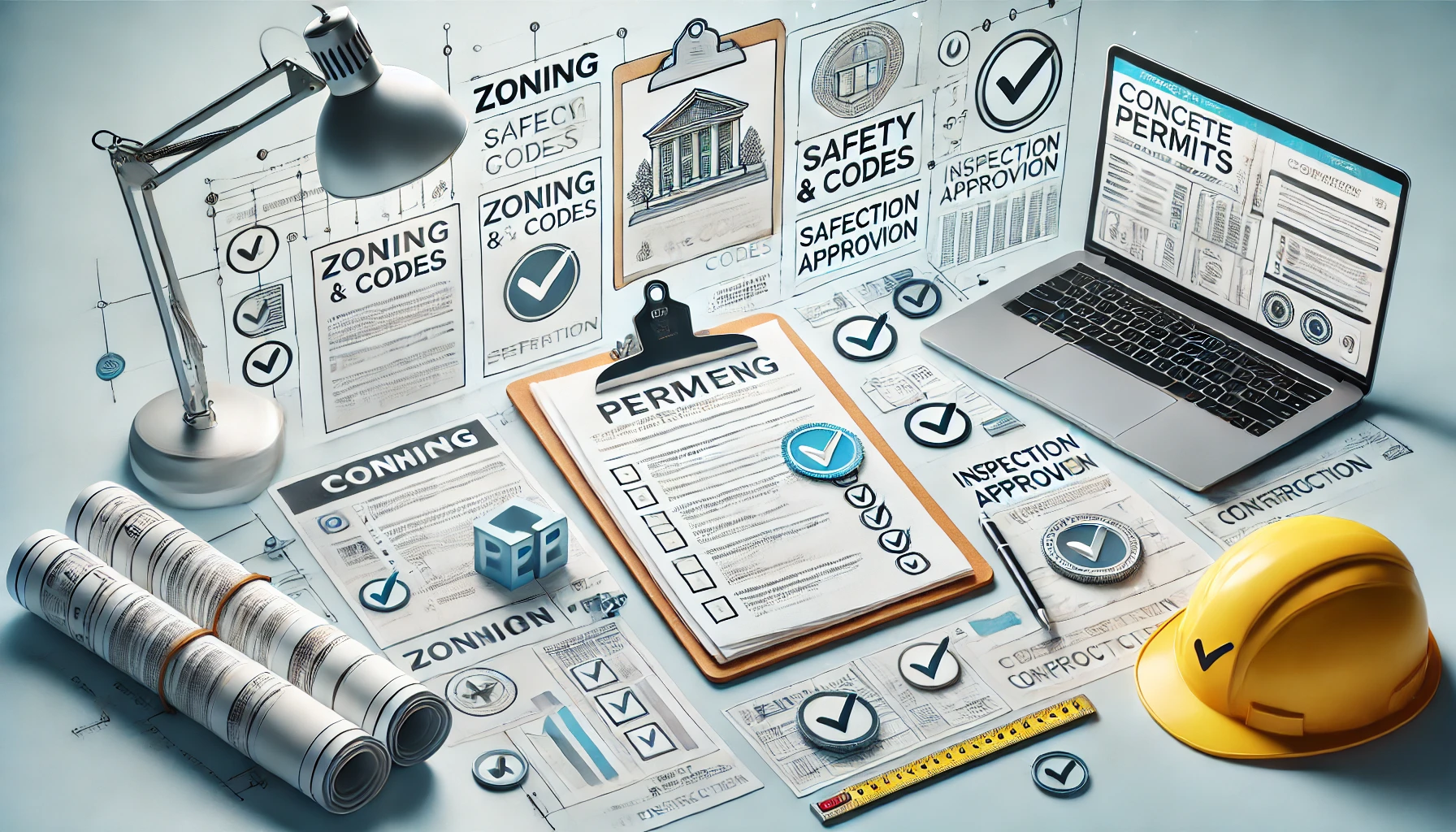
Every concrete project, whether it involves laying a driveway or constructing a multi-level building, must comply with legal requirements. Permits and building codes are not simply bureaucratic steps; they are safeguards that protect public safety and ensure the structural integrity of the work being completed.
Ignoring permits or failing to follow codes can result in costly fines, project delays, or even legal action. More importantly, non-compliance can compromise the safety of the finished structure. By factoring in these legal requirements early in the planning phase, you set the groundwork for a smooth, efficient, and compliant project.
Concrete project planning always begins with understanding the scope of work. As highlighted in our guide to concrete project planning, assessing what needs to be built and where it will be located shapes which permits are required and what codes apply. This connection between planning and compliance is critical for keeping your project on the right track.
Types of Permits for Concrete Projects
Building Permits
The most common type of permit required for concrete projects is a building permit. These permits confirm that your design and intended construction meet local safety and design standards. Whether you’re pouring a foundation for a new home or creating a parking structure, a building permit ensures the work aligns with regulations that safeguard occupants and surrounding property.
Building permits often involve submitting detailed plans and specifications for approval. Municipal authorities review these documents to confirm that the proposed project complies with zoning, building codes, and safety standards. While this process can seem time-consuming, it reduces the risk of future disputes or remediation orders.
Specialty Permits
Some projects require additional specialty permits, depending on the location and type of work. For example, projects in environmentally sensitive areas may require environmental permits. Driveways and sidewalks that connect to public roads often require right-of-way permits. In urban zones, excavation permits may also be necessary before breaking ground.
Each specialty permit has its own requirements and approval timeline, which is why it’s important to build them into the larger project schedule. Overlooking these smaller yet vital permits can halt progress at critical stages of construction.
Building Codes You Must Follow
Structural Codes
Structural codes govern how concrete must be designed, mixed, reinforced, and installed. They specify minimum strengths, reinforcement standards, and curing requirements. For instance, codes may mandate certain reinforcement ratios for foundations or minimum thicknesses for slabs. These rules ensure the concrete can withstand loads, resist cracking, and perform under environmental stress.
Compliance with structural codes also provides long-term benefits. By adhering to these standards, you create structures that last longer, require fewer repairs, and deliver greater value to clients or property owners. Non-compliance, on the other hand, may lead to structural failures that are both dangerous and costly.
Safety Codes
Beyond structural requirements, safety codes are equally important. These codes cover aspects such as slip resistance for walkways, proper drainage around concrete surfaces, and safe clearances for structures. Meeting safety codes reduces liability and ensures that the finished project is safe for users.
Safety codes are updated periodically, so it’s vital to stay current with local regulations. Contractors and homeowners should check with municipal authorities before starting work to ensure they meet the most up-to-date standards.
Zoning Regulations and Land Use
Understanding Zoning Laws
Zoning laws dictate how land can be used within specific jurisdictions. Before applying for permits, you must ensure your project fits within the zoning regulations of your area. For example, residential zones may not allow certain commercial structures, while industrial zones may impose stricter environmental standards.
Zoning also affects details such as setbacks, height restrictions, and allowable surface coverage. These restrictions directly impact how and where concrete structures can be built. Not considering them early can result in having to redesign or relocate parts of your project, wasting time and money.
Land Use Approvals
In some cases, zoning approval may require public hearings or community feedback. If your concrete project impacts traffic patterns, drainage, or neighbourhood aesthetics, additional approval may be required. These steps ensure that development benefits the community without compromising safety or liveability.
The Role of Inspections
Pre-Construction Inspections
Many jurisdictions require inspections before construction begins. Inspectors verify that the site meets safety requirements, that permits are in place, and that all plans align with codes. This step acts as an official “green light” for moving forward.
A thorough inspection at this stage can catch potential issues before they become major setbacks. For example, inspectors may identify soil stability concerns that must be addressed before a foundation can be poured. By addressing such issues early, projects avoid expensive midstream corrections.
Ongoing and Final Inspections
During construction, inspectors may return to check specific phases, such as reinforcement placement or curing progress. Final inspections occur once the project is completed, confirming that everything complies with approved plans and regulations. Passing final inspections provides legal certification that the structure is safe and up to standard.
Integrating Permits and Codes Into Your Project Timeline
Why Timing Matters
Securing permits and passing inspections directly affects your schedule. Without approval, work cannot proceed, which is why compliance must be aligned with your project timeline. Waiting too long to submit applications may create costly delays.
As you structure your timeline, consider how permitting fits into each phase. A well-planned schedule prevents bottlenecks and ensures that every stage of construction moves forward efficiently. This alignment is explored in more depth in the project timeline guide, which highlights how each step of planning influences construction flow.
Coordinating Approvals With Other Tasks
Permit approvals often overlap with site preparation and design work. Coordinating these activities helps streamline the process. For example, while waiting for permit approval, contractors can begin non-permit-related preparation work, such as clearing vegetation or organising materials. Effective coordination ensures no time is wasted.
Site Preparation and Its Connection to Compliance
Permits and codes do not exist in isolation; they directly influence how you prepare your site. From excavation depths to soil stabilisation, legal requirements shape how groundwork is approached. Not following these standards can result in failed inspections and the need for costly rework.
Proper site preparation also makes inspections easier. When the ground is cleared, graded, and ready, inspectors can quickly verify compliance. This reduces delays and creates a seamless transition from planning to construction.
Working With Professionals
Contractors and Compliance
A knowledgeable contractor understands how to navigate the permit and code process. They know which documents to submit, how to communicate with inspectors, and how to build compliance into daily operations. Choosing the right contractor can make the difference between a project that flows smoothly and one riddled with setbacks.
Contractors also serve as advocates for their clients. By handling the details of compliance, they relieve homeowners and property managers of the stress that comes with navigating legal frameworks. This professional guidance is invaluable for complex or large-scale projects.
Legal and Engineering Experts
In addition to contractors, some projects benefit from consulting legal or engineering experts. Lawyers can clarify property rights and zoning disputes, while engineers can ensure structural compliance with advanced codes. These professionals provide added assurance that your project is legally and structurally sound.
Conclusion
Permits and codes form the foundation of responsible construction. They safeguard communities, protect property owners, and ensure that concrete structures meet the highest standards of safety and durability. By factoring in these requirements early, aligning them with your schedule, and preparing your site according to regulations, you avoid costly setbacks and create projects that stand the test of time.
When viewed as part of the broader concrete project planning process, permits and codes are not obstacles but essential tools for success. With proper preparation, expert guidance, and respect for legal requirements, your next project can progress smoothly from concept to completion.