
Concrete work is one of the most common and important aspects of property improvement, whether you are building a new driveway, laying a patio, or installing foundations. These projects are rarely inexpensive, and they often come with surprising expenses that can catch even the most detail-oriented homeowner or property manager off guard. Hidden costs in concrete jobs usually arise from poor planning, miscalculated estimates, unexpected site conditions, or unforeseen delays.
Many of these costs can be avoided if you know what to look for in advance and approach the project with proper preparation. From inaccurate quotes to permit fees, unfinished site prep, or even bad weather, each element in the process can impact your budget in ways you may not anticipate. Being proactive and informed about common pitfalls will help you protect yourself from unnecessary spending.
This article takes you through each key area where budget issues typically arise. From estimating cost accurately, to working with trustworthy contractors, understanding permits, managing the project timeline, and ensuring proper site prep, you’ll gain practical tips to help you steer clear of nasty financial surprises. By the end, you will be better equipped to plan, budget, and execute your concrete project with confidence.
Estimating Cost Accurately
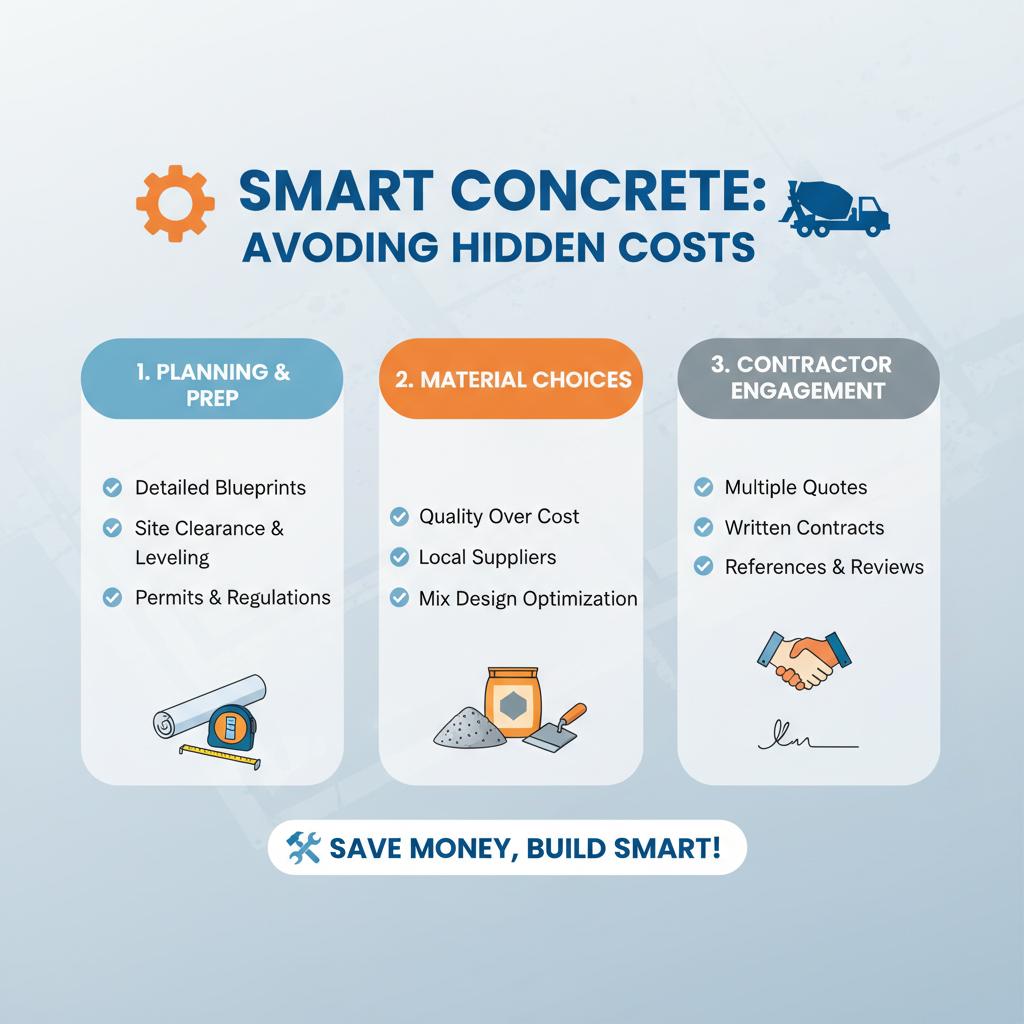
Accurate estimating cost is the foundation of any successful concrete project. Yet, this is often where budgets first go off track. Underestimation leads to financial strain later, while overestimation may result in avoiding a project unnecessarily.
Common Miscalculations
One of the most frequent errors is underestimating the volume of concrete required. Even a small misstep in calculating cubic metres can create large disparities in pricing. Misjudging labour hours also contributes significantly. For example, expecting a crew to finish in two days when the scope realistically demands four nearly doubles labour expenses.
Property owners sometimes forget to account for incidentals such as formwork, reinforcement steel, or disposal fees for old material. Each of these can add hundreds or even thousands of dollars unexpectedly.
Factoring in Materials and Labour
Material and labour costs together typically account for 70–80% of most projects. When estimating cost, it is crucial to check current concrete prices since they fluctuate based on demand and supply. Labour rates can differ regionally and also depending on the crew’s experience.
A realistic estimate should include not only the base rates of materials and labour but also associated equipment like mixers, pumps, and protective sealants. By itemising these expenses, you create a clearer financial picture.
Accounting for Contingencies
Contingencies cover the unexpected elements that nearly always arise in construction. These may involve hitting tree roots while digging, unexpected soil settlement, or hidden pipes beneath the surface. Allocating at least 10–15% of the budget for contingencies prevents financial setbacks if these surprises occur.
A contingency allowance also provides flexibility in decision-making. Rather than stalling the project while seeking more funds, you remain prepared.
Tools for More Accurate Estimates
Several tools can improve cost accuracy. Options include online concrete calculators, professional estimating software, and quantity surveyors. Additionally, many reputable contractors provide digital quotes with itemised breakdowns to highlight exactly what is included.
Spreadsheets designed specifically for construction project management can also track materials, hours, and fees in real-time. Cross-referencing more than one tool ensures greater accuracy.
Choosing Contractors Wisely
Choosing contractors can determine whether you keep your concrete job within budget or face escalating costs. A well-informed choice will help you avoid costly mistakes.
Evaluating Experience and Portfolio
A contractor’s past work is often the best indicator of future reliability. Reviewing completed projects, particularly those similar in size or complexity to yours, shows whether they are equipped to handle the job. An extensive portfolio typically reflects practical knowledge and problem-solving ability, which reduces your risk.
Spotting Unrealistic Quotes
Extremely low quotes should be a warning sign. While everyone wants to save money, choosing contractors who undercut the competition drastically often leads to shortcuts, unskilled labour, or unplanned extras later. If one quote is significantly less than others, ask detailed questions about what is excluded.
Importance of References and Reviews
Checking references is essential. A good contractor should provide previous client contacts on request. Online reviews, while not always flawless, reveal patterns of behaviour such as delays, cost blowouts, or poor workmanship. Real homeowner feedback helps distinguish reliable contractors from risky ones.
Drafting Clear Contracts
Contracts should contain everything from estimated timeframes to payment milestones and what happens in the event of delays or disputes. A vague contract creates room for financial misunderstandings. Always ensure materials, labour, site prep, and responsibilities are clearly listed to protect both parties.
Understanding Permits and Regulations
Permits are another costly area that homeowners sometimes overlook. Failing to budget for them or skipping them entirely can turn into expensive penalties later.
Why Permits Are Essential
Permits and codes protect both you and the community. They ensure the work complies with safety and environmental standards. For example, large structures such as retaining walls or driveways near roads often require approval for structural integrity and water drainage.
Typical Permit Costs by Project Type
Cost varies depending on the nature and size of the job:
| Project Type | Typical Permit Cost Range (AUD) |
| Small patio or pathway | $100–$300 |
| Driveway installation | $300–$600 |
| Foundation work | $500–$1,200 |
| Large retaining wall | $1,000+ |
These costs can quickly add up if you are planning multiple improvements.
Avoiding Fines and Delays
Skipping permits may save you money upfront but jeopardises your entire project. Councils can issue fines, and more critically, you may be required to tear down or re-do non-compliant work. This leads to high financial and emotional stress. Always secure the proper permits before beginning.
Local vs. State Requirements
In most Australian settings, requirements vary between local and state levels. While local councils often regulate small-scale works, state laws may apply to structural or environmental factors. Always check both layers of authority before budgeting.
Managing the Project Timeline
Timeline management directly affects overall cost. Delays can quickly add to labour and equipment fees.
How Delays Increase Costs
Concrete is time-sensitive, requiring accurate placement and curing stages. Any hold-up means more time paid to contractors and equipment hire. Extended projects may also interrupt access to driveways or entryways, creating additional inconvenience.
Weather and Seasonal Challenges
Heavy rainfall, extreme heat, or cold snaps often halt progress. Seasonal awareness is crucial because weather interruptions extend the timeline and increase expenses for labour beyond initial contracts. Planning work in seasons with stable conditions reduces risk.
Setting Realistic Deadlines
Whenever possible, build in time flexibility. If the estimated finish is two weeks, assume it may take slightly longer due to minor setbacks. Incorporating realistic deadlines avoids last-minute budgeting stress.
Coordinating Contractors and Suppliers
Effective coordination ensures that materials, crews, and machinery arrive at the right time. Miscommunication, such as having a ready-mix truck arrive hours before the crew, results in wasted resources. Regular communication with suppliers and contractors helps prevent such inefficiencies.
Proper Site Prep
Site prep is one of the most underestimated aspects of a concrete project. Substandard preparation can create hidden costs far beyond the initial savings.
Grading and Excavation Needs
Preparing the ground correctly is vital for drainage and stability. Grading the slope ensures water flows away from the structure, preventing pooling or erosion. Excavation may also be required to remove unsuitable soil layers, which involves specialised machinery.
Soil Testing and Stability
Professional soil testing determines whether the existing ground can handle the weight of concrete structures. Weak soil might require compaction or even reinforcement, which is an additional cost if unaccounted for from the start.
Removing Old Concrete or Debris
Removing and disposing of old concrete or debris from the site can add significantly to project costs, especially if landfill fees apply. Many homeowners forget to budget for haulage and dumping fees, which can be up to hundreds of dollars per load.
Hidden Costs of Poor Prep
Failing to invest in adequate site prep frequently results in cracking, sinking, or uneven slabs. Fixing these issues later is much more expensive than preparing the site properly upfront.
Other Common Hidden Costs
Material Price Fluctuations
Concrete and steel prices fluctuate with global markets. A quote taken months in advance may be outdated, leading to higher costs if materials rise suddenly.
Design Changes Mid-Project
Changing your mind about layout or finish once work has started is one of the fastest ways to inflate costs. Reworking foundation layouts or decorative finishes often doubles labour and materials.
Equipment and Delivery Fees
Specialised equipment hire such as pumps or cranes is not always included in estimates. Similarly, long-distance delivery charges can appear on invoices if suppliers are located far from your property.
Unexpected Repairs
Hidden issues beneath the soil – for instance, damaged pipes or unsafe foundations – often emerge during excavation. These repairs must be addressed before completing concrete work, increasing expenses.
Practical Budgeting Tips
- Always collect at least three detailed quotes from contractors for comparison.
- Create a written record of what is included under labour, materials, and equipment.
- Ask contractors to specify whether quotes are fixed-price or variable.
- Keep a 10–15% contingency fund in reserve.
- Obtain all necessary permits before committing funds.
Conclusion
Concrete projects can deliver stunning results and lasting value for your property, but hidden costs are a constant risk if you go in unprepared. Miscalculations in estimating cost, poor choices in choosing contractors, neglecting permits, an unrealistic project timeline, or overlooking site prep are the areas where most budgets unravel. By anticipating these pitfalls, you set yourself up for success.
Careful planning, structured contracts, and proactive coordination will save you money in the long term. Taking the time to check soil conditions, secure approvals, and outline clear deadlines reduces stress while maximising efficiency. Most importantly, allocating contingencies gives you flexibility for the unexpected.
Approach your concrete job with foresight, treat each stage with care, and you will avoid most financial surprises. Smart budgeting, combined with the right contractor and preparation, transforms what could have been an expensive headache into a smooth, cost-effective project. Concrete work is an investment – ensuring it is done right the first time is the best way to safeguard your time, resources, and property value.