
Concrete Finishing Techniques
You've decided on concrete for your new patio, driveway, or commercial floor. That's a great choice, but the journey doesn't end when the wet concrete gets poured. One of the most important parts of the whole process is what happens next: concrete finishing.
Think of concrete finishing as putting the final touches on a masterpiece. It's not just about making the surface look good; it's about making it perform the way you need it to, stand up to the elements, and last for years. A well-finished concrete surface can prevent cracks, improve traction, and even add significant curb appeal or a professional touch to a business.
Different projects demand different finishes. What works for a backyard patio probably isn't suitable for a factory floor, and vice versa. The right finish depends on many things, like how the surface will be used, the look you're going for, and even the local weather. Let's explore the world of concrete finishing and the many ways concrete can be transformed.
Standard Concrete Finishing Methods
When people think of concrete, they usually picture a basic gray slab. But even that "basic" slab goes through a finishing process. These standard methods are the backbone of concrete work, providing functional and durable surfaces for a wide range of uses.
Smooth (Troweled) Finish
A smooth finish, often called a troweled finish, is one of the most common and classic looks for concrete. After the concrete is poured and leveled, a bull float is used to smooth out the surface and bring "cream" (a mixture of cement and fine aggregates) to the top.
Once the concrete has stiffened a bit, a power trowel or hand trowel is used to create that slick, smooth surface. With increasing pressure, multiple passes with the trowel will achieve a higher sheen.
Smooth finishes are often seen indoors, such as on garage floors, warehouse floors, or basements. They're also common for walkways and some driveways where a very flat surface is desired.
As the name suggests, it's very smooth and almost glass-like, depending on how much it's troweled. It's very easy to clean and reflects light well, which can save on lighting costs in commercial spaces. It also provides a flat surface for things like forklifts or rolling carts.
However, because it's so smooth, it can become very slippery when wet. This is a big safety consideration, especially for outdoor applications or areas prone to spills. It also tends to show imperfections more easily than textured finishes.
Broom Finish
The broom finish is a workhorse in outdoor concrete applications. It's simple, effective, and prioritizes safety. After the concrete has been floated and brought to a relatively smooth state, a special concrete broom is drawn across the surface while the concrete is still wet but firm enough to hold the texture. The bristles of the broom create fine, parallel lines. Different types of brooms can create varying textures, from very fine to quite coarse.
Concrete driveways, sidewalks, patios, pool decks, and public walkways are prime examples of where you'll find a broom finish. Any outdoor area where slip resistance is important often gets this treatment. It has a slightly rough, textured feel with visible, consistent lines. Its primary advantage is excellent slip resistance, making it much safer than a smooth finish for outdoor areas exposed to rain or moisture.
It's also relatively inexpensive to apply and helps hide minor imperfections. On the downside, it's not as easy to clean as a smooth surface, as dirt can get caught in the grooves. It also doesn't have the aesthetic appeal of some decorative concrete finishes.
Float Finish
The float finish sits between a smooth troweled finish and a broom finish. Often used by experienced professionals as either a prep layer or a final surface, it involves smoothing freshly screeded concrete with a bull float or hand float. This step embeds larger aggregates and brings the cement "cream" to the surface, removing ridges and bumps left by screeding.
Unlike troweling, floating creates a slightly more open surface. Seasoned concrete contractors commonly apply it as a base for broom or stamped finishes, or for slabs that will be covered by concrete flooring. Float finishes are also ideal for utility areas like shed floors, where perfect smoothness isn’t essential but a level, workable surface is still important.
With decades of field use behind it, the float finish remains a trusted option for projects that balance efficiency, affordability, and performance. It offers a flat surface with mild texture, more slip-resistant than a troweled finish and quicker to apply. However, professionals know it’s not suitable for applications requiring extreme smoothness or long-term heavy wear.
Need guidance on the right finish for your project? Work with proven experts who understand what works best—and why. Reach out today for tailored concrete advice and pricing.
Edging and Jointing
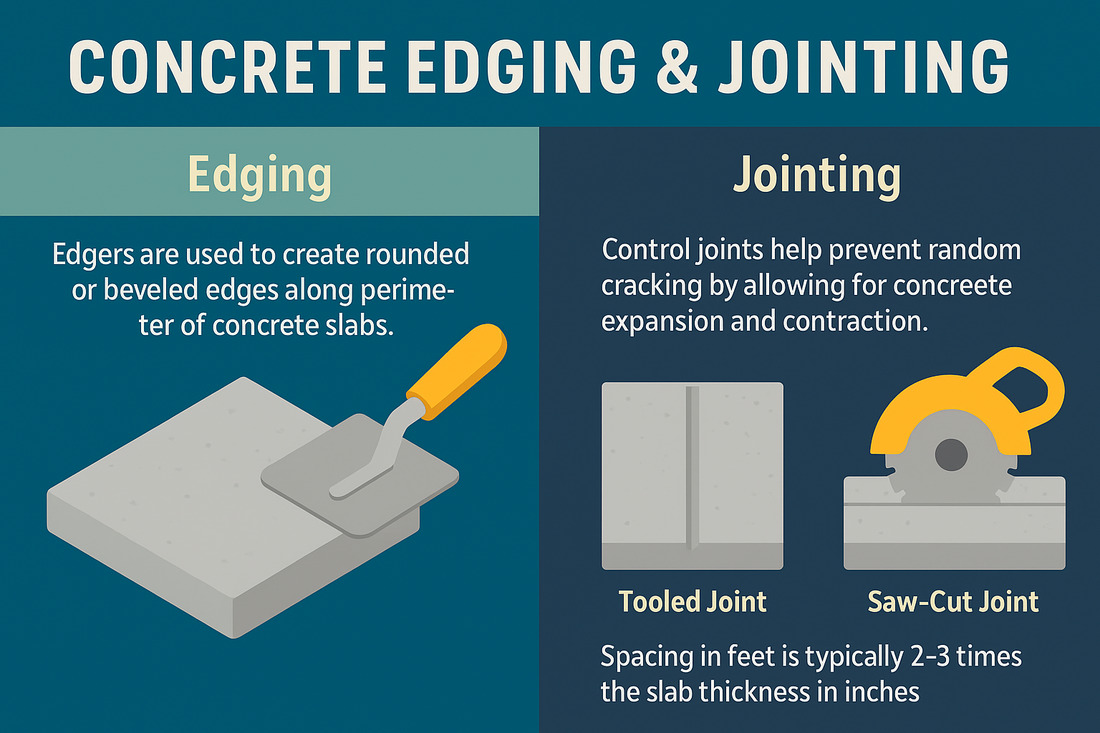
While not full-surface finishes, edging and jointing are essential to the durability and appearance of any concrete slab. Edging shapes the perimeter with a rounded or beveled edge, helping prevent chips and giving a clean, finished look. It’s commonly used on sidewalks, patios, steps, and driveways.
Jointing involves cutting grooves into the concrete to control where cracks occur. These control joints guide natural shrinkage and movement, reducing random cracks. They can be tooled into wet concrete, saw-cut after curing begins, or pre-formed with strips.
Proper joint spacing depends on slab thickness and conditions, but a good rule is 2–3 times the slab’s thickness in inches (e.g., 4-inch slab = 8–12 ft spacing). Well-placed joints are key to long-lasting, professional results.
Protect your concrete from future damage with expert finishing. Contact us today to get it done right.
Exposed Aggregate
Exposed aggregate is a striking finish that reveals the natural stones within the concrete. By washing off the top layer or using methods like sandblasting or grinding, the decorative pebbles or crushed stone underneath are brought to the surface.
This finish is popular for pool decks, patios, walkways, and driveways where a natural, textured look is desired. It’s tough, slip-resistant, and visually unique. The rough surface provides both function and style, especially in outdoor spaces.
While it requires skilled application and can feel coarse underfoot, exposed aggregate offers long-term value, low maintenance, and curb appeal.
Add lasting beauty and texture to your outdoor space with exposed aggregate. Contact us today to get a customised quote from trusted concrete pros.
Stamped Concrete
Stamped concrete, or patterned concrete, is designed to mimic the look of stone, brick, slate, or wood. After colouring and floating, flexible mats are pressed into the surface to create realistic patterns and textures.
Stamped concrete is perfect for patios, walkways, driveways, and pool decks, offering a decorative and highly customisable finish. It is more affordable than natural stone, durable, and visually striking when properly sealed and maintained.
Just be aware that it needs skilled installation and regular sealing to prevent fading or slipperiness. If repairs are not matched carefully, they may be noticeable.
Want the look of natural stone without the high cost? Book a stamped concrete consultation today and bring your vision to life.
Salt Finish
A salt finish provides a subtle, dimpled texture that's both attractive and offers some slip resistance. After the concrete is poured, floated, and begins to set, rock salt crystals are sprinkled evenly over the surface. The salt is then pressed into the concrete with a roller or float. Once the concrete has hardened, the salt crystals are dissolved and washed away with water, leaving behind small, random indentations or pits.
This finish is used on pool decks, patios, walkways, and other areas where a subtle textured look and moderate slip resistance are desired. It creates a surface with small, rounded depressions, giving it a unique, dimpled appearance. It provides a pleasant, understated aesthetic and offers good slip resistance without being overly rough.
It's also relatively inexpensive and easy to apply compared to some other decorative finishes. The main drawbacks are that the texture can be less pronounced if the salt isn't pressed in deeply enough, and the depressions can collect dirt if not regularly cleaned.
Tinted/Color-Integrated Concrete
Tinted (or color-integrated) concrete adds rich, consistent colour throughout the entire slab by mixing pigments, usually iron oxides, directly into the concrete. Unlike surface stains, the colour runs through the full depth of the pour, offering long-lasting vibrancy.
This method is ideal for driveways, patios, walkways, interior floors, and as a base for stamped or stained finishes. It doesn’t change the surface texture, which still depends on the final finish applied, such as broomed, floated, or polished.
While tinted concrete offers fade-resistant, chip-proof colour in a wide range of tones, slight variation can occur due to mix differences. It’s also more expensive and harder to alter after installation.
Choose a colour that lasts as long as your concrete. Talk to our experts today to explore your tinted concrete options.
Polished Concrete
Polished concrete turns a plain slab into a smooth, durable, and light-reflective surface. The finish can range from a soft satin to a high-gloss shine using diamond grinding tools and densifiers. It’s popular in retail, industrial, and even residential spaces.
It’s low-maintenance, eco-friendly, and ideal for high-traffic areas. Polished concrete resists stains, allergens, and mold. While the upfront cost is higher, the long-term benefits often outweigh it. Just note that extremely glossy finishes can be slippery without proper treatment.
Thinking about polished concrete? Get expert guidance and a flawless finish—contact us now for a free consultation.
Burnished Finish
A burnished finish is a less common but distinctive method that creates a dark, almost leathery appearance on the concrete surface. This technique involves extensively troweling the concrete surface, often with a power trowel, at the very late stages of the concrete's setting process. As the concrete gets harder and harder, the troweling generates friction and heat, essentially "burning" the surface to achieve a tough, dense, and dark finish. It's a highly skilled process that requires precise timing.
This finish is mostly used in interior applications like lofts, art studios, and some commercial spaces where a unique, almost industrial or rustic aesthetic is desired.
The surface is extremely smooth and dense and often has a unique, mottled, and somewhat variegated appearance, with areas of lighter and darker tones due to the intense troweling. It creates a hard and durable surface and has a unique, sophisticated, and often artistic aesthetic that develops a patina with good light reflection over time.
However, due to its extreme smoothness, it can be very slippery when wet and requires highly experienced and skilled finishers due to the precise timing and technique involved. It's not suitable for all concrete mixes and can be prone to minor imperfections or trowel marks due to the intensive handwork.
Decorative and Specialty Finishes
Beyond the standard functional finishes, there's a whole world of decorative and specialty concrete finishes designed to make concrete a true design element. These are often seen in residential settings like patios and interior floors, as well as in commercial lobbies and retail spaces where aesthetics are paramount.
Stamped Overlays
Stamped concrete overlays are a fantastic way to revitalize existing concrete without the cost and hassle of tearing out and replacing the old slab. A thin layer of polymer-modified cementitious material (the overlay) is applied over an existing concrete surface. This overlay is specifically designed to bond tightly to the old concrete and be strong enough to be stamped.
It's stamped with patterns once applied and still wet, much like regular stamped concrete. Color is often integrated into the overlay mix or applied as a color hardener and release agent.
This refurbishes old, cracked, or dull concrete patios, walkways, pool decks, or interior floors. It's a popular option for homeowners who want the look of stamped concrete without a full replacement.
The surface texture mimics the pattern stamped into it, just like regular stamped concrete (stone, brick, wood, etc.). It's a cost-effective alternative to concrete replacement and can cover minor imperfections and cracks in existing concrete. It offers a wide range of design and color options and quicker installation than tearing out and repouring.
However, it's not suitable for heavily damaged or unstable concrete. The overlay is typically thinner than a full slab, so it might not be as durable in extremely high-traffic or heavy-load situations. It also requires proper surface preparation of the existing concrete for good adhesion.
Acid Staining
Acid staining creates a one-of-a-kind, translucent colour effect that mimics natural stone or aged leather. It uses a chemical reaction between acidic solutions and minerals in the concrete to produce permanent, mottled tones.
This finish is perfect for interior floors, patios, and walkways where a distinctive, earthy look is desired. The stain doesn’t alter the surface texture. It enhances whatever finish is already there, like troweled or floated concrete.
While acid stains are durable, low maintenance, and fade-resistant, the final colour can be unpredictable and limited to natural tones. Proper prep and ventilation are essential during application.
Transform plain concrete into a custom work of art. Contact us to discuss your acid staining project today.
Scoring and Engraving
Scoring and engraving involve cutting patterns into the concrete surface to create a tiled look, geometric designs, or even custom artwork. Scoring involves making shallow cuts into the hardened concrete surface using a concrete saw with a diamond blade. These cuts typically don't go very deep, just enough to create the desired pattern. The lines can mimic grout lines for a tile effect or create intricate geometric designs.
Engraving is a more advanced technique using specialized machines to cut deeper, more intricate designs, logos, or even realistic images into the concrete.
These techniques are used on interior floors, patios, and commercial spaces where a custom, patterned, or tiled look is desired without installing separate tiles. They're often combined with acid staining or integral color. The cuts themselves introduce slight grooves, but the underlying concrete finish determines the overall texture.
It creates custom, permanent designs and can simulate the look of expensive tile or stone at a lower cost, adding architectural interest and visual appeal. It's also durable and low-maintenance.
On the other hand, it requires precise layout and skilled operators. Cuts can accumulate dirt if not properly cleaned and sealed, repairing mistakes is difficult, and complex patterns can be time-consuming.
Sealers and Coatings
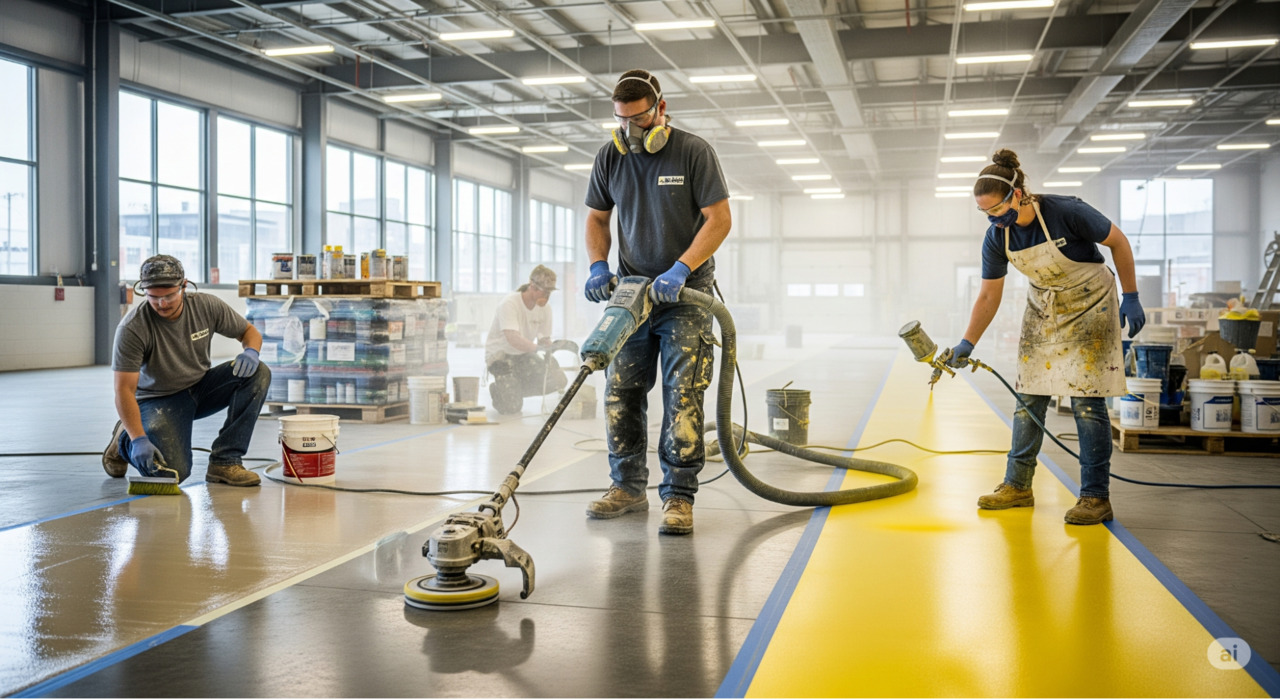
While not a finish in themselves, sealers and coatings are essential for protecting and enhancing most concrete finishes. They're applied as a liquid over the cured concrete surface and form a protective barrier.
There are two main types. Penetrating sealers soak into the concrete pores, providing protection from within without changing the surface appearance significantly, and are good for freeze-thaw protection and preventing water absorption.
Topical sealers form a film on the surface. These can provide a range of finishes from matte to high-gloss and offer excellent stain resistance. They are often acrylic, epoxy, or urethane based.
You'll use these on all types of finished concrete, especially those exposed to weather, heavy traffic, or spills (driveways, patios, garage floors, retail floors, etc.). Their primary purpose is protection against stains, spills, abrasion, freeze-thaw damage, and UV fading. They also enhance the appearance by bringing out the color of stained or colored concrete or adding a desired sheen.
Finishing for Residential vs. Commercial Projects
Choosing the right concrete finish isn't just about what looks good. It's also heavily influenced by whether the project is for a home or a business. The priorities shift quite a bit between residential and commercial applications.
Residential Projects
Homes often focus on creating inviting, attractive spaces that reflect the homeowner's style. Homeowners typically want a finish that complements their landscaping, home architecture, or interior design.
This is where decorative options like stamped concrete, exposed aggregate, acid staining, and salt finishes really shine. The tactile feel of the surface also matters – for a patio, something comfortable to walk on barefoot might be preferred over a very rough texture.
Sometimes, a homeowner might splurge on a unique finish for a patio while opting for a more standard broom finish for a driveway. Homeowners generally want something easy to clean and maintain, but they may be more willing to perform periodic resealing for a decorative finish they love.
Commercial Projects
Commercial spaces, on the other hand, prioritize function, durability, and compliance. Commercial floors often endure heavy foot traffic, machinery, spills, and constant use. Finishes like polished concrete, smooth troweled concrete, and heavy-duty coatings are favored for their ability to withstand wear and tear.
Businesses need floors that are easy and cost-effective to clean and maintain on a regular basis. Polished concrete and smooth troweled surfaces are excellent for this, as they don't trap dirt and can be quickly cleaned.
Slip resistance is paramount in commercial settings to prevent accidents and comply with safety regulations. This might mean a broom finish for exterior loading docks, or incorporating non-slip aggregates into floor coatings for interior spaces. Ramps, in particular, need careful consideration for traction.
Commercial projects often deal with larger square footage, so the initial cost per square foot becomes a significant factor. While some higher-end finishes are used in lobbies, basic but durable finishes are common in warehouses or back-of-house areas.
Commercial concrete must often meet specific building codes, health regulations (e.g., for food service areas), and ADA (Americans with Disabilities Act) requirements for accessibility and slip resistance.
Factors That Influence the Right Finish
Choosing the perfect concrete finish isn't a one-size-fits-all decision. Several key factors should always be considered to ensure the final product meets your needs and lasts for years.
Climate and Weather
The local climate and expected weather conditions play a huge role in finish selection, especially for outdoor concrete. In areas with cold winters, water can seep into the concrete's pores, freeze, and then expand, causing the surface to spall or flake off. Finishes that are very dense (like highly troweled or polished concrete) can be more resistant. However, proper air-entrainment in the concrete mix and a high-quality penetrating sealer are crucial for any outdoor concrete in these climates.
If properly specified and installed, exposed aggregate and broom finishes are generally resilient in freeze-thaw conditions. Outdoor surfaces that get wet frequently absolutely need good slip resistance. A broom finish, exposed aggregate, or salt finish an excellent choice for driveways, patios, and walkways.
A non-slip additive in the sealer is essential for smoother decorative finishes like stamped concrete. Intense UV rays can fade the colors of some dyes or stains over time. Using UV-resistant sealers and choosing integral colors that go through the concrete can help mitigate this.
Surface Use (Foot vs. Vehicle Traffic)
How the concrete will be used dictates how durable and resistant the finish needs to be. For areas with light foot traffic (e.g., residential patios, indoor decorative floors), a wider range of finishes, including decorative options like stamped concrete, acid-stained, or salt finishes, where aesthetic appeal is a high priority, can be accommodated.
Durability becomes more important for areas with heavy foot traffic (e.g., commercial lobbies, public walkways). Polished concrete is a top choice here, as it is a highly durable broom finish for outdoor areas.
Surfaces with vehicle traffic (e.g., driveways, parking lots) need to withstand heavy loads, tire abrasion, and chemical spills (oil, gas). Due to its durability and traction, a broom finish is standard for driveways.
For commercial parking lots, often simple float finishes or broom finishes are used with a strong focus on proper concrete strength and jointing. Industrial use (e.g., warehouses, factories) demands extreme durability and abrasion resistance.
Polished concrete, sometimes with aggregate exposure for added toughness, or specialized epoxy/urethane coatings are common to handle forklifts, heavy machinery, and chemical spills.
Budget and Maintenance Expectations
The initial cost and ongoing maintenance requirements are always important considerations. A basic float finish or broom finish will generally be the most economical options.
Exposed aggregate and salt finishes fall into the mid-range. Stamped concrete, polished concrete, and extensive acid staining or engraving typically have higher upfront costs due to the specialized materials, equipment, and labor involved.
Some finishes, like a basic broom finish, are relatively low maintenance, requiring just occasional cleaning. Decorative finishes like stamped concrete and acid-stained concrete will require periodic resealing (every 2-5 years, depending on traffic and exposure) to protect the color and surface.
Polished concrete is remarkably low maintenance once installed, requiring just regular cleaning. Consider the ease of cleaning; smooth surfaces are generally easier to wipe clean, while textured surfaces might require more effort to remove trapped dirt.
Slip Resistance and Local Code
Safety is paramount, and slip resistance directly impacts it. Local building codes often have specific requirements for slip resistance, especially in public or commercial spaces. Any area that will be exposed to water (rain, pool splash, cleaning) or where spills are likely needs a finish with adequate traction.
Generally, the rougher the texture, the better the slip resistance. This is why broom finishes, exposed aggregate, and salt finishes are excellent for outdoor safety. If you choose a smoother finish like stamped concrete or polished concrete, it is critical to incorporate non-slip additives into the sealer. These additives create a very fine, gritty texture that dramatically improves traction without significantly altering the appearance.
Always check with your local building department or a knowledgeable contractor about any specific codes related to slip resistance for your project type, especially for commercial applications or public access areas. ADA compliance is a common concern for businesses.
What to Look For in a Contractor
Not all concrete contractors have the same level of skill, especially when it comes to specialised or decorative finishes. Ensure they have hands-on experience with the specific finish you need, like stamped, polished, or acid-stained concrete. Ask for examples of similar projects and check references.
A true professional will have the right equipment for the job and understand how to handle different conditions, mix types, and finish timing. They’ll also explain the process clearly, set realistic expectations, and communicate throughout the project.
Always confirm that they’re properly licensed and insured. This protects you and your property in case anything goes wrong.
Want expert results you can trust? Talk to a concrete specialist who delivers quality from the ground up. Reach out today to get started.
Why Experience with Different Finishes Matters
Successfully applying a wide range of finishes isn't just a matter of having the tools; it's about having the deep understanding that comes from hands-on experience.
Concrete finishing is incredibly sensitive to timing. Knowing when to float, trowel, stamp, or wash off exposed aggregate is a learned skill that separates true craftsmen from amateurs. A few minutes too early or too late can ruin a finish.
Every concrete pour is unique, influenced by temperature, humidity, mix design, and more. Experienced finishers can problem-solve by reading the concrete and adapting their techniques on the fly to address unexpected challenges, ensuring a quality result. There's an art to achieving a natural, believable look for decorative finishes.
An experienced stamped concrete crew knows how to blend patterns, apply release agents for realistic color variations, and minimize repeat patterns. A skilled acid stain applicator understands how to achieve a mottled, translucent effect rather than a blotchy mess.
Finally, the right finish, correctly applied, directly contributes to the durability and longevity of your concrete. An experienced finisher ensures the concrete is compacted correctly, cured, and protected, maximizing its lifespan and performance.
Ready to get the finish just right? Don’t leave your project to chance. Trust seasoned professionals who know how to read the mix, time every move, and deliver stunning, lasting results. Get in touch today and see what expert concrete finishing really looks like.
Conclusion
Concrete finishing is more than just pouring a slab. It shapes how your surface looks, performs, and lasts. From slip-resistant broom finishes to polished concrete that shines, each method serves a purpose.
Choosing the right finish means considering your climate, usage, safety needs, and budget. But the final result depends on the skill of the finisher. Their timing and technique are what bring the surface to life.
Get the job done right with expert hands. Contact us today to choose the perfect finish for your space.