
Concrete construction has advanced well beyond traditional methods, with modern innovations redefining strength, sustainability, and efficiency. Once valued simply for its durability and versatility, concrete is now at the centre of a technological revolution that is reshaping how we design, build, and maintain our infrastructure. From high-performance mixes that resist extreme weather to self-healing formulations that automatically repair cracks, the possibilities are expanding at an unprecedented pace.
These advancements are not just about stronger buildings. They also reflect a growing focus on sustainability and smarter resource use. Eco-friendly materials are reducing construction's carbon footprint, while digital tools like Building Information Modelling (BIM) and smart sensors are making it easier to monitor structural health in real time. Techniques such as 3D printing enable faster, more precise builds, and innovative reinforcement methods extend the lifespan of concrete structures.
In this article, we explore the latest breakthroughs driving change in concrete construction, examining how they improve performance, enhance design flexibility, and meet the evolving demands of modern projects. Understanding these innovations can help you make more informed decisions for your next build, whether you are an architect, engineer, contractor, or property owner.
Ultra-High-Performance Concrete (UHPC)
UHPC is engineered for exceptional strength and durability, far exceeding conventional concrete. Its dense composition, often including steel fibers, allows for compressive strengths up to 29,000 psi. UHPC is ideal for demanding applications such as slender bridge decks, durable industrial floors, and resilient military structures, where its strength and resistance to wear are crucial.
Self-Healing Concrete
This innovative material has the remarkable ability to repair small cracks, extending structural lifespan and reducing maintenance. It works through bio-based methods (embedding bacteria that produce crack-filling limestone) or chemical methods (encapsulated healing agents released upon cracking). Self-healing concrete is particularly promising for underground structures, water-retaining tanks, and marine environments where repairs are difficult.
Lightweight and Insulated Concrete
Beyond strength, innovation also focuses on reducing weight and improving thermal performance.
Aerated Concrete
Autoclaved Aerated Concrete (AAC) is a lightweight, precast material created by introducing air into a concrete mix, forming numerous air-filled pores. AAC blocks are significantly lighter than conventional concrete, reducing structural loads. They offer excellent thermal and sound insulation, are fire-resistant, and are easy to work with, making them suitable for masonry units.
Foam Concrete and ICF (Insulated Concrete Forms)
Foam concrete is a lightweight cellular concrete produced by incorporating foam into a cement slurry, allowing for various densities. Insulated Concrete Forms (ICFs) utilize hollow foam blocks that serve as permanent formwork for concrete walls. The concrete core provides structural integrity, while the foam delivers continuous insulation. ICFs offer superior energy efficiency, sound attenuation, and increased strength for walls, along with faster construction times.
Low-Carbon and Green Mixes
Reducing concrete's environmental impact is a major focus, involving mixes that use less traditional cement, incorporate waste materials, or even capture carbon dioxide.
Use of Fly Ash, Slag, Silica Fume
Replacing a portion of Portland cement with supplementary cementitious materials (SCMs) like fly ash (from coal plants), ground granulated blast-furnace slag (GGBFS) (from iron production), and silica fume (from silicon production) significantly reduces concrete's carbon footprint. These industrial byproducts improve strength, reduce permeability, and enhance long-term durability while lowering the need for energy-intensive cement production.
Carbon-Sequestering Concrete
Carbon-sequestering concrete actively captures and stores carbon dioxide within the material. Technologies like CarbonCure inject recycled CO₂ into fresh concrete, where it reacts with calcium ions to form permanent calcium carbonate. This process sequesters CO₂ and can enhance concrete strength, allowing for less cement use and turning concrete into a carbon sink.
Cement Alternatives
The long-term goal for low-carbon concrete is to develop cement alternatives that don't rely on energy-intensive clinker production. Geopolymer concrete uses industrial wastes (fly ash, slag) activated by alkaline solutions, offering strong, durable concrete with a significantly lower carbon footprint. Other alternatives include magnesium oxide cement and calcium sulfoaluminate (CSA) cement.
Advanced Construction Techniques
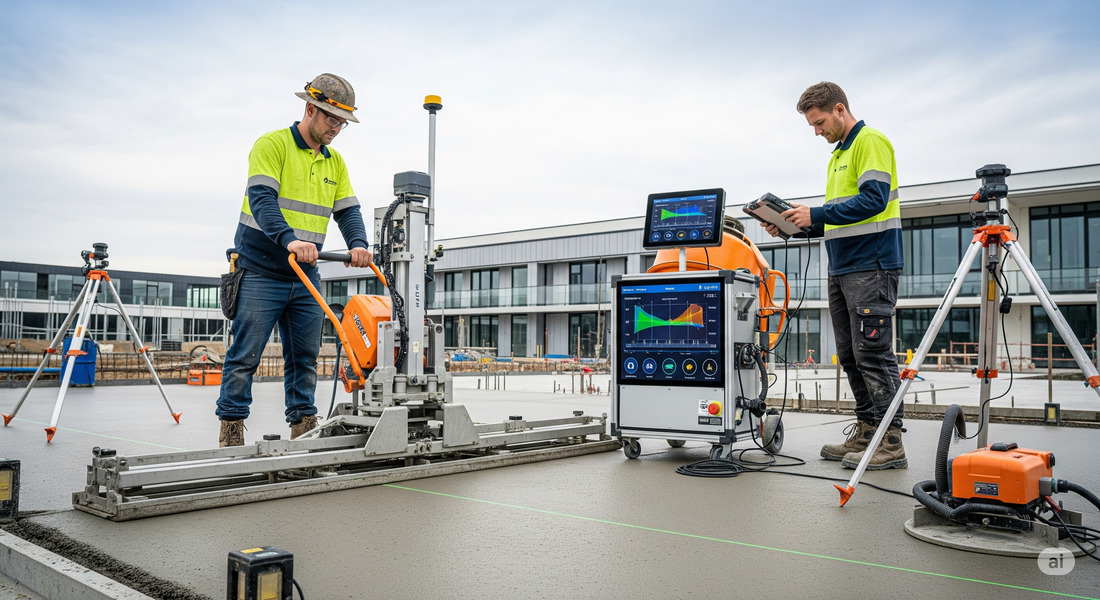
How concrete is placed and formed is also undergoing significant transformation, promising faster builds, reduced labor, and greater precision.
3D Concrete Printing
3D concrete printing uses robotic systems to extrude layers of specialized concrete, building structures without traditional formwork.
Applications in Housing and Modular Building
This technology is rapidly advancing, particularly for affordable housing and modular construction. Entire walls or small homes can be printed in days, significantly lowering costs by reducing labor and material waste. Projects in Texas, Mexico, and Dubai are demonstrating its viability for rapid housing deployment and complex architectural elements.
Speed, Labor Reduction, and Cost Implications
3D printing offers dramatic speed of construction, significantly shortening project timelines. It substantially reduces the need for manual labor on-site for repetitive tasks, contributing to lower overall costs due to reduced labor expenses and minimal material waste from precise placement.
Precast and Modular Systems
Precast and modular concrete systems involve manufacturing concrete components off-site in a controlled factory environment for later assembly.
Factory-Made Panels and Components
These systems produce individual elements like wall panels, floor slabs, beams, columns, and even entire volumetric units in a factory. This controlled environment ensures consistent quality and optimal strength, transporting elements to the site for efficient assembly.
Time-Saving and Quality Control Advantages
Off-site manufacturing allows parallel construction (site prep simultaneously with component production), leading to significant time savings. It also ensures superior quality control through consistent conditions, reducing defects and improving safety by shifting work to a controlled environment.
Roller-Compacted Concrete (RCC)
Roller-Compacted Concrete (RCC) is a drier concrete mix placed using asphalt paving equipment and compacted with vibratory rollers.
Fast-Laying Method Used in Roads and Industrial Surfaces
RCC is a rapid and economical paving method, ideal for large, flat areas like heavy-duty industrial pavements (ports, intermodal yards), low-speed roads, and dams. Its dry consistency allows for immediate compaction without formwork, enabling continuous and fast placement.
Differences from Traditional Pour
Unlike fluid traditional concrete, RCC is a zero-slump mix that holds its shape instantly. It's placed by pavers and compacted by rollers (highly mechanized), rather than manual pouring and finishing. RCC typically requires fewer or no traditional contraction joints and offers significant cost savings and faster construction for large areas due to reduced labor and formwork.
Shotcrete and Sprayed Concrete
Shotcrete, or sprayed concrete, applies concrete or mortar at high velocity through a hose onto a surface.
High-Efficiency Installation for Tunnels, Slopes, Retaining Walls
This technique allows for rapid placement, especially on irregular or overhead surfaces, and provides excellent bond strength. Shotcrete is extensively used for lining tunnels and shafts, stabilizing slopes, constructing or reinforcing retaining walls, and forming custom swimming pools. Its benefits include high efficiency, excellent adhesion, versatility for complex shapes, and reduced formwork costs.
Smart Technologies and Digital Tools
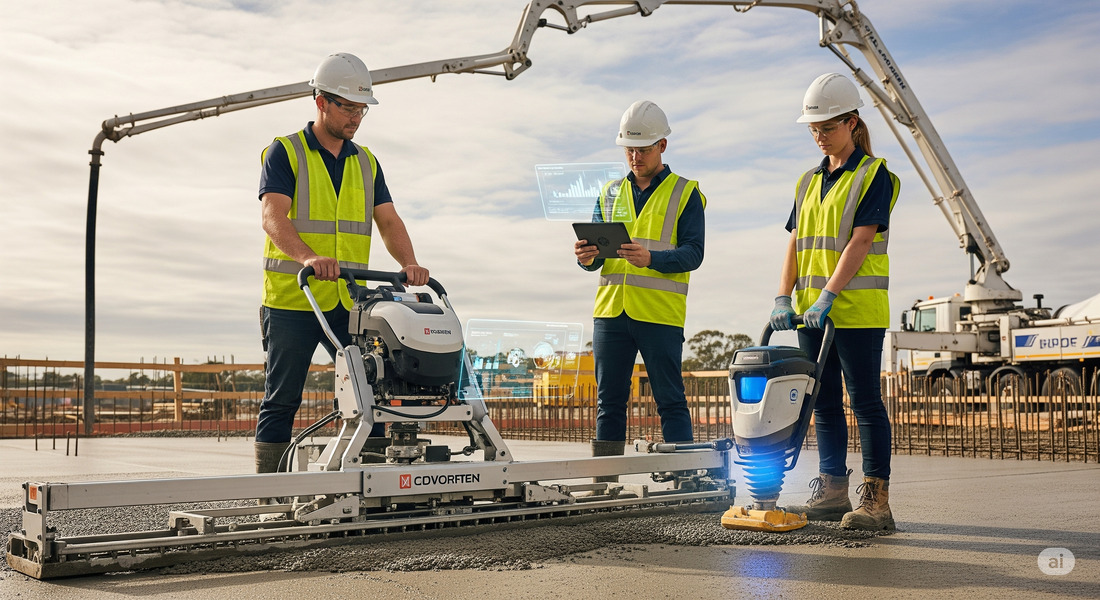
Integrating smart technologies and digital tools is profoundly changing how concrete projects are designed, managed, and executed, moving towards a data-driven future.
Concrete Sensors and IoT Monitoring
Embedded sensors, driven by the Internet of Things (IoT), provide real-time data on concrete conditions throughout their lifecycle.
Real-time Curing, Moisture, and Temperature Monitoring
Sensors continuously track temperature (preventing thermal cracking in mass concrete or ensuring proper curing in cold weather), moisture content (confirming adequate curing and detecting water ingress), and strength development (using maturity sensors). This data helps ensure optimal curing, prevent defects, and inform decisions about formwork removal and loading.
Use on Job Sites for Quality and Safety Control
This real-time data improves quality control by consistently curing and detecting early problems. It enhances safety control by confirming concrete strength before formwork removal. This leads to optimized schedules and cost savings through faster project progression and reduced rework, and enables long-term asset management for critical infrastructure.
Building Information Modeling (BIM) in Concrete Design
Building Information Modeling (BIM) is a digital representation of a project, rich with information about every structural element.
How BIM Improves Pre-Planning and Coordination
BIM creates a detailed 3D model of all concrete elements, enabling comprehensive project visualization for all stakeholders. It allows for accurate material take-offs and cost estimates, optimizes formwork and reinforcement design, and facilitates detailed construction sequencing in a 4D environment. This improves collaboration by providing a single, shared source of truth.
Clash Detection and Structural Simulation
BIM's powerful applications include clash detection, which automatically identifies spatial conflicts between concrete elements and other building systems (e.g., rebar and conduits) during design, preventing costly on-site rework. It also enables structural simulation and analysis, allowing engineers to test different concrete mixes and designs digitally to optimize for strength, efficiency, and code compliance.
Drones and Robotics in Concrete Construction
The deployment of drones and various robotic systems is automating and enhancing several aspects of concrete construction.
Site Inspection, Surveying, and Material Delivery
Drones provide aerial views for progress monitoring, quickly capture data for accurate topographical surveys and mapping, and can be used for safety inspections of hard-to-reach areas. While emerging, larger drone systems are being explored for material delivery to remote areas on large sites.
Automated Rebar Tying and Concrete Printing Robots
Robotics are taking on hands-on roles, such as automated rebar tying, which increases efficiency, improves safety, and ensures consistent quality. Concrete printing robots are fundamental to 3D concrete printing, precisely extruding and layering concrete to build structures rapidly and with minimal labor, opening new possibilities for construction automation.
Reinforcement and Structural Innovations
Reinforcement is essential for concrete's tensile strength and ductility. Innovations here lead to stronger, more durable, and more efficient concrete structures.
Fiber-Reinforced Concrete (FRC)
Fiber-Reinforced Concrete (FRC) incorporates discrete, short fibers uniformly distributed throughout the mix, enhancing tensile strength, ductility, and crack resistance.
Steel, Glass, and Synthetic Fiber Types
- Steel fibers improve post-cracking strength, toughness, and fatigue resistance, used in industrial floors and bridge decks.
- Glass fibers (GFRC), alkali-resistant, provide excellent tensile strength and are used for lightweight architectural panels.
- Synthetic fibers (polypropylene, nylon) are primarily used for early-age plastic shrinkage crack control in slabs and pavements.
Benefits Over Traditional Rebar in Certain Conditions
While FRC often complements rebar, it offers improved crack control throughout the matrix, enhanced ductility and toughness (making concrete more resilient to impact), and reduced construction time by sometimes eliminating the need for mesh in non-structural applications. It also increases durability by reducing crack pathways for corrosive agents.
Post-Tensioning and Prestressed Concrete
Prestressing introduces internal compressive stresses into concrete to counteract future tensile stresses, improving strength, stiffness, and durability, allowing for longer spans and more slender elements.
How Tensioning Improves Strength and Reduces Cracking
In pre-tensioning, tendons are tensioned before concrete is poured. In post-tensioning, tendons are tensioned after concrete cures by pulling them through ducts. Both methods introduce compression, which significantly reduces or eliminates cracking under service loads, increases strength and stiffness, enables longer spans, and allows for more slender sections by efficiently using the material.
Use in Bridges, Slabs, and Parking Structures
Prestressed and post-tensioned concrete are widely used in bridges for long-span girders, in slabs for multi-story buildings (allowing thinner sections and larger column-free spans), and in parking structures where reduced cracking and enhanced durability are crucial for resisting heavy traffic and de-icing salts.
Composite Reinforcements
New composite materials are gaining traction, offering distinct advantages over steel rebar, especially where corrosion is a concern.
Use of Carbon Fiber, Basalt, or Fiberglass Rods
These are typically Fiber Reinforced Polymer (FRP) bars made by embedding continuous fibers in a polymer resin.
- Carbon Fiber Reinforced Polymer (CFRP) rods offer exceptionally high strength, lightweight, and absolute immunity to corrosion, used in high-performance structures and marine environments.
- Basalt Fiber Reinforced Polymer (BFRP) rods provide high tensile strength, good chemical resistance, and are non-corrosive.
- Fiberglass Reinforced Polymer (GFRP) rods are common and cost-effective, offering excellent corrosion resistance, lightweight properties, and non-magnetic characteristics, widely used in bridge decks and aggressive chemical environments.
Corrosion Resistance and Lightweight Alternatives
The primary advantage of FRPs is their corrosion resistance, eliminating the common issue of steel rebar rust, which causes concrete spalling and structural degradation, leading to significantly longer service lives and reduced maintenance. FRPs are also significantly lighter than steel (1/4 to 1/5 the weight), reducing dead loads and simplifying installation. Their non-magnetic and electrically non-conductive properties are critical for specialized applications like MRI facilities.
Sustainable Concrete Practices
Making concrete more sustainable involves reducing its demand for virgin resources and diverting waste.
Carbon Capture and Storage in Concrete
This innovation turns concrete into a carbon sink by capturing and storing CO₂ within the material.
CarbonCure and Similar Technologies
CarbonCure Technologies injects recycled CO₂ into fresh concrete, where it reacts to form permanent calcium carbonate within the mix. This process both sequesters CO₂ and enhances concrete strength, allowing for a reduction in cement content and further lowering the carbon footprint. Other technologies are also exploring carbon mineralization for aggregates or binders.
Storing CO₂ Inside the Mix Permanently
The CO₂ is chemically transformed into stable carbonate minerals, permanently locking it within the concrete matrix for the structure's lifespan. This offers a scalable solution for reducing atmospheric carbon and provides environmental and competitive advantages for producers and projects seeking green certifications.
Permeable Concrete for Stormwater Management
Permeable concrete, or pervious concrete, has high porosity, allowing water to pass directly through it.
Applications in Urban Infrastructure
This property makes it excellent for sustainable stormwater management by mimicking natural infiltration. It's widely used in parking lots, walkways, low-volume roads, and as a key component of green infrastructure and Sustainable Urban Drainage Systems (SUDS).
Reducing Runoff and Supporting Green Building Certifications
Permeable concrete significantly reduces stormwater runoff, mitigating urban flooding and helping recharge groundwater. It filters pollutants, contributes to mitigating the urban heat island effect, and supports green building certifications like LEED. It can also reduce overall site drainage infrastructure costs.
Recycled Aggregates and Materials
Using recycled materials in concrete mixes reduces demand for virgin resources and diverts waste from landfills.
Concrete Made from Crushed Concrete, Recycled Glass, or Plastic
- Recycled Concrete Aggregate (RCA) from demolished structures can replace natural aggregates, diverting waste and conserving resources.
- Recycled glass can be processed into fine aggregates, diverting glass waste.
- Recycled plastic can replace a portion of aggregates or be used as fibers, addressing plastic waste and potentially making concrete lighter.
Impacts on Strength and Environmental Footprint
While properly processed RCA can maintain comparable strength, using significant amounts of recycled glass or plastic might sometimes reduce concrete strength, requiring careful mix design. Overall, recycled materials offer substantial environmental benefits by diverting waste, conserving natural resources, reducing embodied carbon from material extraction and transport, and promoting a circular economy.
Case Studies and Real-World Examples
Innovation's impact is best seen in its practical applications.
3D Printed Communities
The promise of 3D concrete printing for rapid and affordable housing is becoming a reality.
Housing Prototypes in Texas, Mexico, and the Middle East
ICON has partnered with Habitat for Humanity for 3D-printed homes in Texas, demonstrating speed and efficiency. New Story collaborated with ICON to print the first 3D-printed community in Mexico, providing affordable housing. Dubai Municipality has set ambitious goals, showcasing 3D-printed office buildings and residential units, highlighting the technology's potential for rapid urban development.
UHPC Bridge Decks
UHPC is proving invaluable in bridge infrastructure due to its durability and strength.
Examples from the U.S. Department of Transportation
The U.S. Department of Transportation (DOT) has promoted UHPC use. Early projects like the Wapello County Bridge in Iowa (2006) and the Tainter Street Bridge in New York (2008) utilized UHPC for slender, durable precast bridge decks. UHPC is also key for Accelerated Bridge Construction (ABC), enabling rapid connections of precast elements to minimize traffic disruption.
Smart Infrastructure Projects
Integrating sensors and data monitoring into large-scale infrastructure creates truly "smart" systems.
Use of Embedded Sensors in Major Highway and Airport Builds
Embedded sensors in Denver International Airport (DIA) runways and major highway projects (e.g., I-95) monitor pavement performance, temperature, and stress, helping assess health, predict maintenance, and optimize operations. Large dam monitoring also uses sensor networks for continuous structural health assessment, ensuring safety and long-term stability.
Challenges and Considerations
Adopting new materials and techniques faces several hurdles.They include:
Cost vs. Long-Term Value
High Upfront Costs of New Materials or Technologies
New materials like UHPC and FRP rebar and technologies like 3D concrete printing and IoT sensors often have higher initial material or investment costs due to specialized manufacturing, R&D, and equipment.
ROI from Durability, Speed, and Efficiency
Despite higher upfront costs, innovations offer a strong Return on Investment (ROI). They provide enhanced durability and extended service life, significantly reducing long-term maintenance. Faster construction leads to lower labor and financing costs. Labor efficiency and improved safety also contribute to savings, alongside reduced material waste and energy efficiency for sustainable concrete options.
Training and Labor Gaps
The shift to advanced concrete demands new skill sets.
Need for Skilled Technicians and Updated Practices
Operating new equipment (3D printers, robotics), understanding new mix designs (UHPC, self-healing concrete), maintaining digital proficiency (BIM, IoT data interpretation), and mastering new quality assurance and testing protocols require significant training and updated practices.
Resistance to Change in Traditional Sectors
The construction industry often resists new methods due to risk aversion, lack of awareness, significant investment in existing equipment, fragmented industry structure, and supply chain limitations for novel materials. Overcoming this requires demonstrating success, clear ROI communication, and industry-wide education.
Regulatory and Code Barriers
Innovation's pace often outstrips the development of industry standards and building codes.
Lack of Standardization for New Materials
New materials like self-healing concrete or advanced FRP reinforcement often lack widely accepted industry composition, testing, and performance standards. This makes it difficult for engineers to specify them confidently and for regulators to approve them without extensive, costly, special analysis.
Testing Requirements and Safety Certifications
New products face rigorous testing for mechanical properties and durability, and require certifications (e.g., ICC-ES) to prove fitness for purpose. The slow process of building code adoption creates a significant lag, as code committees require substantial data and consensus before integrating new technologies.
What’s Next in Concrete Construction?
The future of concrete points towards a material that is stronger, more sustainable, intelligent, and adaptable.
Ongoing Research in Nano-concrete, Graphene-infused Cement, and AI-Controlled Pours
Research is exploring nano-concrete to enhance strength and add functionalities like self-cleaning. Graphene-infused cement shows promise for improved strength, durability, and conductivity, potentially leading to self-sensing concrete. AI-controlled pours and robotics will enable more autonomous, optimized concrete placement, with AI analyzing real-time data for mix adjustments and robotic precision in construction, moving towards predictive infrastructure management.
Global Trends: Climate-Resilient Concrete, Smart Cities, Low-Carbon Codes
These research areas align with global trends. We'll see climate-resilient concrete designed to withstand extreme weather and permeable concrete for flood management. Smart cities will integrate sensors into concrete infrastructure for real-time monitoring and data-driven management. Low-carbon codes will increasingly mandate or incentivize sustainable concrete solutions, emphasizing embodied carbon limits and life cycle assessments.
Conclusion
Innovation is profoundly transforming the concrete industry towards advanced materials, cutting-edge techniques, and smart technologies. From UHPC bridges to 3D-printed homes, and from self-healing concrete to carbon-sequestering mixes, these advancements offer enhanced durability, faster construction, reduced labor, and significant environmental benefits.
For project planners, builders, and engineers, embracing these innovations is crucial. The long-term value, including reduced maintenance and operational costs, often outweighs initial investments. Partnering with forward-thinking contractors who understand these new options in materials, methods, and design is essential for delivering the future's resilient, efficient, and sustainable infrastructure and buildings. The concrete industry is evolving, and adapting to these changes is key to success.