
When you think about your home, you might picture cozy rooms, a well-kept yard, or a welcoming front porch. But beneath it all, concrete quietly supports the structure and function of the spaces you use every day. At AAA Concreting, we’ve spent decades helping homeowners across the U.S. build stronger, more beautiful properties with expert concrete solutions.
Residential concrete services go far beyond basic utility. Quality concrete work adds lasting value, safety, and curb appeal, from durable foundations and smooth driveways to decorative patios and walkways. Professional installation makes all the difference, whether you're building from the ground up or enhancing an existing space.
With our experience on thousands of job sites, we know what it takes to deliver concrete that performs and looks great for years. Concrete isn’t just for highways and commercial buildings. When handled by skilled professionals, it’s one of the most versatile and cost-effective materials for home improvement.
In this guide, we’ll walk you through the essentials. You’ll learn about the types of services available, the design options to consider, and why working with a qualified contractor like AAA Concreting protects your investment from the start. We’ll also share practical tips to keep your concrete looking its best long after the job is done.
Types of Residential Concrete Services We Offer
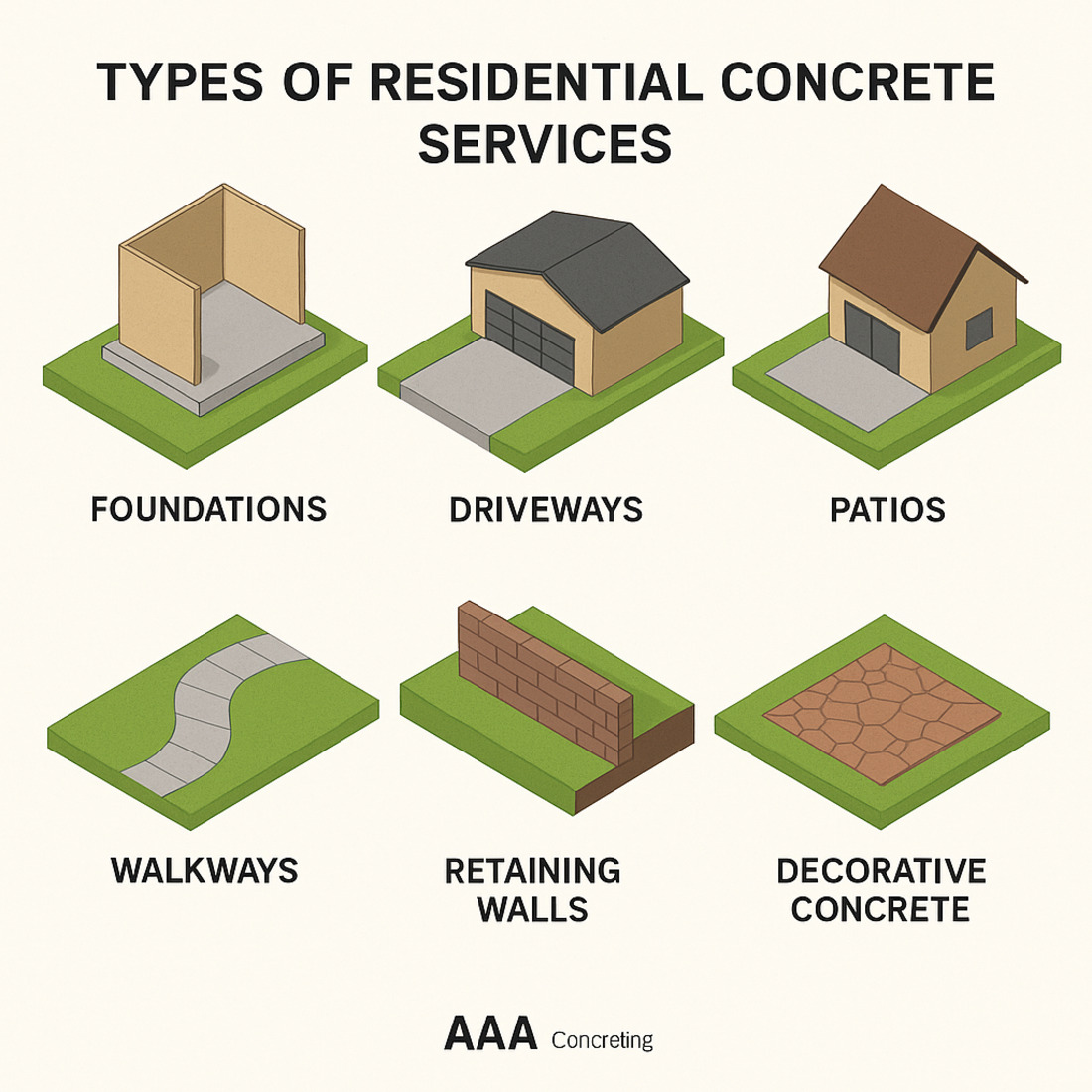
Concrete serves many purposes around a home, each requiring specific expertise and attention to detail. Let’s break down the most common residential concrete services and what makes each one unique.
Concrete Driveways
Your driveway is often the first thing people see when they approach your home. More than just a path for your car, a well-built concrete driveway adds curb appeal and provides a stable, long-lasting surface.
Concrete driveways are popular for several reasons. They are incredibly durable, capable of handling heavy vehicle traffic and resisting the elements for decades. They also require minimal maintenance compared to other materials like gravel or asphalt. These driveways are ideal for single-family homes, duplexes, and multi-car garages, and can be designed in straight, curved, or customized shapes with turning areas.
They offer exceptional longevity, strong load-bearing capacity, are easy to clean, provide various design options, and can enhance your home's resale value. They are often reinforced with rebar or mesh for added strength, and common finishes include a simple broom finish for slip resistance, or more decorative options like stamped concrete to mimic stone or pavers, or colored concrete for a unique look.
Sidewalks and Walkways
Sidewalks and walkways guide people around your property, connecting different areas like your front door to your driveway, or your patio to a garden shed. They need to be safe, accessible, and visually appealing.
These pathways are perfect for connecting public sidewalks to your front door, navigating through gardens, linking different parts of your yard, or creating access routes to back entrances or utility areas. They provide safe and even walking surfaces, enhance the flow and accessibility of your property, and can significantly improve your home's curb appeal. Similar to driveways, they often use a broom finish for safety. Decorative options like stamped, colored, or exposed aggregate can make them a feature rather than just a functional path. Edging can also be incorporated for a neater look.
Patios and Outdoor Living Spaces
A concrete patio can transform your backyard into an inviting outdoor living area, perfect for entertaining, dining, or simply relaxing. Unlike wood decks, concrete patios are incredibly durable and resistant to rot, pests, and fire.
Concrete patios are excellent for creating outdoor dining areas, grilling stations, fire pit zones, sunbathing spots, and foundations for gazebos or pergolas. They are extremely durable and low-maintenance, offer a solid, level surface for outdoor furniture, and are highly customizable with decorative finishes to match your home's style.
Patios are often poured over a compacted base. Stamped concrete is particularly popular for patios, allowing them to resemble flagstone, brick, wood planks, or other natural materials. Colored concrete can add warmth, and a smooth finish can create a sleek, modern look.
Foundations (Slab, Crawlspace, Basement)
The foundation is arguably the most critical concrete service for any home. It provides the structural base upon which the entire building rests. A properly constructed foundation ensures your home's stability, longevity, and safety.
There are three main types of concrete foundations used in residential construction:
- Slab-on-Grade Foundations: This method involves pouring a single, solid concrete slab directly onto stable ground. At AAA Concreting, we often recommend this option for single-story homes, garages, and home additions in warmer regions where soil movement is minimal. It's cost-effective, fast to construct, and helps prevent moisture intrusion and pest problems common with other foundation types.
- Crawlspace Foundations: These foundations are built using concrete footings and short perimeter walls, raising the structure a few feet off the ground. With years of experience working in varied soil conditions, we often suggest crawlspaces in areas prone to shifting ground or where easy access to plumbing and electrical systems is important. They also offer better air circulation and reduce flood risk in some regions.
- Basement Foundations: This type includes full-height concrete walls and a poured concrete floor, creating an entire usable level below the home. Our team frequently installs basement foundations in colder climates, where frost lines run deep. They offer valuable living or storage space, protect pipes from freezing, and provide excellent thermal insulation when built correctly.
Foundations always use high-strength concrete, reinforced with rebar for structural integrity. The finish is typically utilitarian, though basement floors can be finished to a smooth, ready-to-use surface. Drainage systems are often incorporated to prevent water issues.
Concrete Steps and Entryways
Concrete steps and entryways provide safe and durable access points to your home, linking different levels or leading up to a front door. They need to be strong enough to handle constant foot traffic and exposure to the elements.
These are perfect for front door steps, back door entryways, steps leading to elevated patios or decks, and garden steps. They are extremely durable and long-lasting, resistant to rot and pests, can be custom-designed to fit any space, and offer excellent slip resistance with proper finishes.
Reinforced concrete is essential for steps. Finishes often include a broom finish for traction or a smooth troweled finish. Decorative options like coloring or stamped patterns can make them blend seamlessly with your home's exterior.
Garage Floors
A garage floor endures a lot: heavy vehicles, oil spills, chemical leaks, and constant wear and tear. Due to its strength and resilience, concrete is the ideal choice.
Concrete garage floors are perfect for residential garages, workshops, and utility sheds. They are extremely durable and strong, resist heavy loads, are easy to clean, and are less susceptible to damage from chemicals or oil than other materials.
High-strength concrete, often reinforced, is used. A common finish is a smooth, troweled surface for easy cleaning, or a slightly textured finish for better grip. Epoxy coatings can be applied later for added protection and a decorative look.
Concrete Pool Decks
A concrete pool deck provides a safe, attractive, and slip-resistant surface around your swimming pool. It needs to withstand constant exposure to water, chemicals, and sunlight while remaining comfortable underfoot.
Pool decks are used for surrounding in-ground pools, creating sunbathing areas, and providing pathways to pool houses or outdoor showers. They are durable and long-lasting, resistant to water and pool chemicals, less prone to splintering or fading than wood, and can be made slip-resistant.
They often include special additives for water resistance. Popular finishes include exposed aggregate for a textured, natural stone look, stamped concrete to mimic pavers or flagstone, and cool deck coatings that reflect heat and remain comfortable even in direct sun.
Decorative Concrete (Stamped, Colored, Exposed Aggregate)
Decorative concrete allows homeowners to achieve sophisticated and unique looks without the high cost or maintenance of natural materials. It’s a fantastic way to add personality and visual interest to driveways, patios, walkways, and more.
Stamped Concrete
This involves pressing rubber mats with patterns into freshly poured concrete to create the look of stone, brick, wood, or even intricate tile designs. It’s highly versatile and can be colored to enhance the illusion of natural materials. Stamped concrete is ideal for patios, driveways, walkways, pool decks, and interior floors. It offers endless design possibilities, is a cost-effective alternative to natural stone, is highly durable, and low maintenance.
Colored Concrete
Pigments are added to the concrete mix or applied to the surface to create a wide range of hues, from subtle earth tones to vibrant shades. Colored concrete can be used on any concrete surface, often combined with stamping or other finishes. It provides permanent color that won't fade or chip, allows for custom aesthetics, and can complement your home’s exterior.
Exposed Aggregate
This finish involves removing the top layer of cement paste to expose the natural aggregates (stones, pebbles, crushed rock) within the concrete. This creates a textured, slip-resistant, and visually appealing surface. Exposed aggregate is great for driveways, walkways, pool decks, and patios. It offers excellent slip resistance, a natural and varied appearance, is very durable, and relatively low maintenance.
Retaining Walls and Landscape Features
Concrete retaining walls are essential for managing sloped landscapes, preventing soil erosion, and creating terraced gardens. Beyond their functional purpose, they can also be decorative elements that define outdoor spaces.
These walls support elevated garden beds, create level areas on sloped properties, prevent soil erosion, define property lines, and build raised planters. They provide structural support, prevent erosion, create usable flat spaces, and can be integrated into landscape design.
Retaining walls are often reinforced with rebar. Finishes can range from a simple, utilitarian look to decorative options like stamped or colored concrete to blend with the surrounding landscape. Segmental block retaining walls are also common, using pre-cast concrete units.
Our Concrete Styles and Finishes for Homes
One of the most exciting aspects of choosing concrete for your home project is the vast array of styles and finishes available. These finishes affect the appearance of the concrete as well as its texture, slip resistance, and maintenance requirements. Homeowners can truly customize their concrete to match their aesthetic preferences and functional needs.
How to Choose Your Finish
When selecting a finish, consider:
- Your home's architectural style: Does your home lend itself to a rustic, modern, or traditional look?
- Desired aesthetic: Do you want something natural, sleek, or highly decorative?
- Functionality: Is slip resistance a priority, especially for pool decks or steps?
- Maintenance: How much upkeep are you willing to do?
- Budget: Some decorative finishes are more complex and thus more costly than simpler options.
Advantages of Using Concrete in Residential Projects
With decades of hands-on experience in residential construction, we’ve seen firsthand why concrete has remained a foundational building material for centuries. Its unmatched durability, cost-effectiveness, and versatility make it a top choice for homeowners across USA seeking long-lasting, low-maintenance solutions.
Durability and Lifespan
One of concrete’s most significant benefits is its incredible durability. When properly installed and maintained, concrete surfaces can last for decades, often exceeding the lifespan of alternative materials.
It withstands heavy use, extreme temperatures, and constant exposure to the elements without breaking down. This long lifespan means fewer replacements and repairs over time, saving homeowners money and hassle.
Low Maintenance
Unlike many other materials that require regular painting, sealing, or repair, concrete is remarkably low-maintenance.
A simple sweep and occasional washing are often all that’s needed to keep it looking good. While some decorative finishes benefit from periodic sealing, the overall upkeep is minimal compared to wood, asphalt, or pavers, which can shift, crack, or become overgrown with weeds.
Weather Resistance
Concrete is inherently resistant to various weather conditions. It doesn't rot like wood, rust like some metals, or degrade rapidly under UV exposure. It can withstand freezing and thawing cycles, heavy rain, strong winds, and intense sunlight. This makes it an ideal material for outdoor applications like driveways, patios, and sidewalks in almost any climate.
Design Flexibility
While often seen as a utilitarian material, concrete offers surprising design flexibility. As discussed in the finishes section, it can be stamped, colored, stained, and textured to mimic expensive natural materials or create unique, modern designs. Its ability to be poured into virtually any shape allows for custom curves, intricate patterns, and seamless integration into existing landscapes, providing homeowners with endless possibilities for personalization.
Eco-Friendliness
Modern concrete production is becoming increasingly eco-friendly. Concrete is made from abundant natural resources like sand, gravel, and water. Many concrete mixes now incorporate recycled materials, such as fly ash or slag, reducing waste and decreasing the need for virgin materials. Furthermore, its long lifespan means less frequent replacement and thus less material consumption over time. When properly cured, concrete also helps regulate indoor temperatures, contributing to energy efficiency in homes with concrete foundations or floors. Concrete's thermal mass can absorb and release heat, moderating temperature swings.
Residential Concrete vs. Commercial Concrete
With years of on-site experience in both residential and commercial projects, we understand the clear differences in how concrete is used across each setting. Factors like project size, material choice, design needs, and compliance with specific building codes all require a specialised approach. These differences are key to delivering safe and durable residential concrete solutions.
| Feature | Residential Concrete | Commercial Concrete |
| Scale of Projects | Smaller projects (driveways, patios, house foundations). | Large-scale projects (warehouses, high-rises, parking lots). |
| Load Bearing | Designed for lighter loads (cars, foot traffic, house weight). | Designed for very heavy loads (trucks, machinery, large crowds). |
| Concrete Mix | Typically uses standard strength mixes (e.g., 2500-3500 psi). | Often requires higher strength mixes (e.g., 4000-8000+ psi). |
| Reinforcement | Usually uses rebar or wire mesh for crack control. | Extensive rebar networks and post-tensioning cables for structural integrity. |
| Speed of Pouring | Can be done with smaller trucks; less emphasis on speed. | Often involves multiple large trucks, continuous pouring for monolithic slabs. |
| Design & Aesthetics | Focus on homeowner preference, decorative finishes, and curb appeal. | Focus on functionality, durability, cost-effectiveness; aesthetics are secondary. |
| Code Requirements | Governed by residential building codes, which are often less stringent. | Subject to complex commercial building codes, ADA compliance, fire codes, etc. |
| Site Access | Often easier access, less disruption to the public. | Complex logistics, traffic management, and public safety concerns. |
| Equipment | Smaller pumps, hand tools, and standard finishing equipment. | Large boom pumps, power screeds, and riding trowels for efficiency. |
| Permitting | Simpler permitting process, usually at the municipal level. | More complex, multi-layered permitting often involves state/federal regulations. |
| Drainage Systems | Basic slope for runoff, simple trench drains. | Elaborate storm drain systems, retention ponds, often integrated into the site plan. |
In essence, residential concrete work is often more about finesse, aesthetics, and meeting individual homeowner needs, while commercial concrete is driven by sheer strength, scale, and strict regulatory compliance.
We understand the nuances of working on a home, from minimizing disruption to integrating decorative elements that enhance a property’s personal charm.
What to Expect During a Residential Concrete Project
When you work with AAA Concreting, you're backed by decades of industry expertise and a team that knows how to get it right the first time. Starting a concrete project can feel overwhelming, but our step-by-step process is designed to keep you informed and confident from day one. We handle every stage precisely, making the entire experience straightforward and stress-free.
Expect:
Site Preparation and Planning
This is the crucial first step. We will begin by assessing the project area. This involves measuring and layout to accurately mark out the exact shape and boundaries of the concrete pour.
Next is excavation and grading, which means removing any existing material and grading the ground to ensure proper slope for drainage, preventing water from pooling. Finally, base material installation involves laying down a layer of compacted gravel or crushed stone. This base provides a stable, even surface for the concrete and helps with drainage, preventing future cracking due to ground movement.
Forming and Reinforcement
Once the base is prepared, the area is ready for forming and reinforcement. Forming involves meticulously placing wooden or metal forms around the perimeter. These forms act as a mold, holding the wet concrete in place until it sets and ensuring the final shape and dimensions are correct.
Depending on the project, steel rebar or wire mesh will be laid out within the formed area for reinforcement. This reinforcement significantly increases the concrete’s tensile strength, helping it resist cracking due to expansion and contraction, ground movement, or heavy loads. For foundations, this step is particularly critical.
Pouring and Curing
This is when the concrete truly comes to life. The concrete, delivered by a ready-mix truck, is carefully poured into the forms. Contractors use specialized tools to spread the concrete evenly and eliminate air pockets. The surface is then screeded to level it and then floated to push down aggregates, bring "cream" to the surface, and remove imperfections, preparing it for the final finish.
Concrete curing is perhaps the most overlooked yet vital step. Curing is maintaining adequate moisture and temperature in the concrete for a specific period after pouring. This allows the concrete to gain maximum strength and durability.
Methods include covering the concrete with plastic sheeting, applying curing compounds, or misting it with water. Proper curing prevents rapid drying, leading to cracking and reduced strength. Depending on the concrete mix and weather conditions, it typically takes several days to a few weeks.
Finishing Techniques
Once the concrete is poured and partially set, the finishing work begins. This is where the chosen aesthetic comes to life. Power or hand trowels are used for smooth finishes to create a dense, flat, and often shiny surface. For a non-slip texture, a specialized broom is dragged across the surface.
Large rubber mats are pressed into the surface for decorative patterns by stamping. Coloring or staining involves applying pigments or mixing them into achieve the desired color. The top layer of cement is washed away with exposed aggregate to reveal the stones beneath.
Cleanup and Post-Project Care
After the concrete has set and the forms are removed, the contractor will handle all cleanup, removing debris, forms, and tools from the site. You’ll also receive specific post-project care instructions on how to care for your new concrete. This might include how long to wait before walking or driving on it, recommendations for sealing, and tips for cleaning and maintenance. Following these instructions is crucial for the longevity and appearance of your new concrete.
A good contractor will communicate with you throughout the process, address any concerns, and ensure the project aligns with your vision.
Tips for Homeowners Hiring a Concrete Contractor
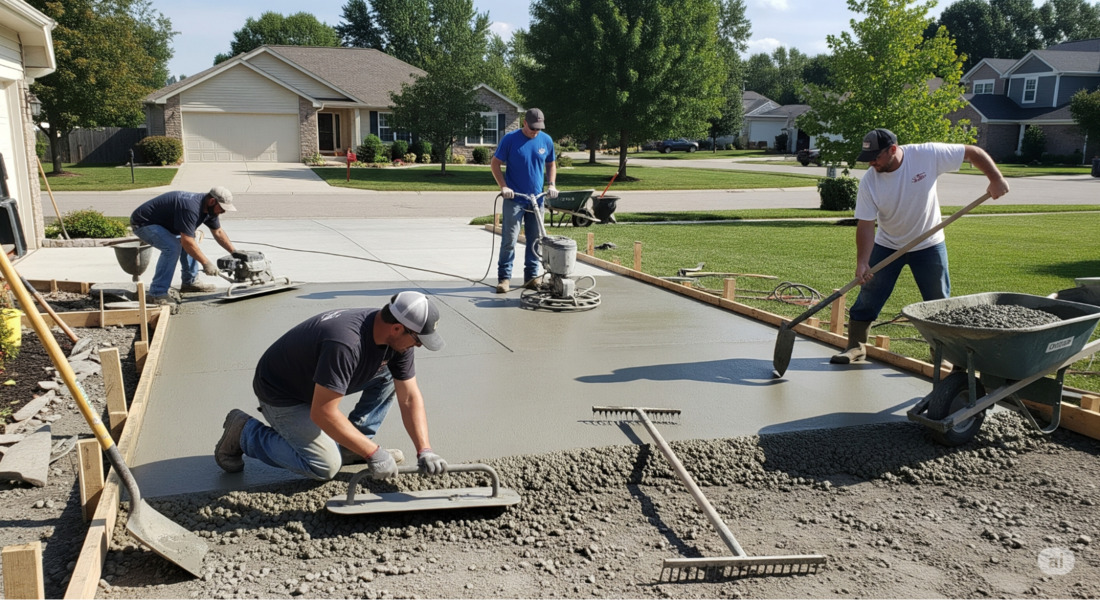
Choosing the right concrete contractor is as important as choosing the right material. A skilled and reliable professional ensures your project is completed safely, efficiently, and to a high standard, saving you headaches and money in the long run. Here are some essential tips for homeowners looking to hire a concrete contractor.
What to Ask Before Hiring
Don’t hesitate to ask detailed questions. A reputable contractor will welcome them.
- Can you provide a detailed, written estimate that includes a breakdown of all costs?
- What is your experience with projects similar to mine, and can you provide examples?
- Are you licensed, bonded, and insured?
- How long will the project take, including prep, pouring, and curing times?
- What type of concrete mix will you use, and what is the PSI (strength)?
- What kind of reinforcement will be used, such as rebar or mesh, and how will it be placed?
- What are your payment terms, including the deposit and payment schedule?
- Do you offer a warranty on your work, and what does it cover?
- How do you handle site cleanup after the project is complete?
Signs of a Reliable Concrete Company
Look for these indicators that you’re dealing with a trustworthy professional:
- Clear Communication: They respond promptly to your inquiries, explain processes clearly, and keep you informed.
- Professionalism: They arrive on time for appointments, provide written proposals, and present themselves in an organized manner.
- References: They are willing and able to provide references from previous clients. Make sure to call these references.
- Detailed Contracts: They provide a comprehensive contract that outlines the scope of work, materials, costs, timelines, and warranty.
- Patience and Explanation: They take the time to answer all your questions and explain options without pressure.
- Local Presence: While not always a deal-breaker, a local company often has a better understanding of local regulations, soil conditions, and a stronger reputation in the community.
At AAA Concreting, we don’t just tick boxes. We set the standard. From clear communication to flawless finishes, we deliver the kind of service every homeowner hopes for but rarely finds. Reach out today and let’s build something solid together.
Maintenance and Care for Residential Concrete
Concrete is known for its strength and longevity, but like any surface, it performs best with proper maintenance. At AAA Concreting, we help homeowners protect their investment with proven care strategies that prevent wear, preserve appearance, and extend lifespan.
Sealing Tips
Sealing protects concrete from moisture, stains, chemicals, and UV damage. We recommend sealing new concrete about 28 days after pouring, once cured, and resealing every 1 to 5 years depending on use and exposure. Penetrating sealers maintain a natural look, while topical options like acrylic or polyurethane enhance colour and provide extra durability. Always clean surfaces thoroughly before sealing, and follow product directions carefully.
Crack Prevention
Even well-poured concrete can form hairline cracks, but our professional installation methods minimise this risk. We use proper reinforcement, subgrade prep, drainage solutions, and carefully placed control joints to manage natural expansion and stress. Most small cracks are cosmetic, but growing or wide cracks may need expert repair.
Cleaning Methods
Routine cleaning helps concrete surfaces stay safe and attractive. Sweep often and wash with mild soap and water. A pressure washer works well for deeper cleaning—just use care on decorative finishes. Grease, rust, and mildew each need specific treatments. We recommend testing cleaners on a small area first and avoiding anything too harsh for sealed or coloured surfaces.
Looking to keep your concrete in top condition? AAA Concreting provides trusted advice and hands-on support for sealing, cleaning, and long-term care. Contact us today to make sure your surfaces stay strong, clean, and built to last.
How We Address Surface Wear and Discolouration
Even quality concrete can fade or wear over time. We identify the root cause, whether it’s UV exposure, stains, or freeze-thaw damage, and choose the right solution. From pressure cleaning and resealing to re-staining or resurfacing, we restore both strength and appearance with long-lasting results.
Why Professional Installation Matters
At AAA Concreting, we know that proper installation is the foundation of long-lasting, high-performing concrete. Cutting corners or hiring unqualified contractors often leads to cracks, drainage problems, and costly repairs. We get it right the first time with precision prep, expert reinforcement, and quality finishes that stand the test of time.
Long-Term Value
Our team delivers concrete work that lasts. By using correct techniques, we help homeowners avoid premature repairs and replacements. Proper material use, efficient timelines, and minimal waste mean you save more over the life of your concrete, without sacrificing quality.
Safety and Compliance
Concrete work comes with serious risks and strict regulations. Our licensed, insured professionals follow safety protocols and meet all building codes. From drainage to structural integrity, we handle every technical detail to protect your home and your investment.
Curb Appeal That Pays Off
We understand that concrete isn't just functional—it’s part of your home’s visual appeal. Whether you want a clean broom finish or a decorative surface, we deliver polished results that enhance curb appeal and boost resale value.
At AAA Concreting, we have everything it takes to meet the standards savvy homeowners look for in a contractor—proven experience, full licensing and insurance, and a track record of quality work. Get in touch today to see how we can bring your concrete project to life with confidence and care.
Build with Confidence. Finish with Quality.
Quality concrete work makes a lasting difference, from the strength beneath your home to the outdoor spaces you enjoy daily. Residential concrete offers the durability, flexibility, and visual appeal that modern homeowners value. When done right, it adds real function and value to your property.
At AAA Concreting, we bring deep expertise, professional care, and attention to detail to every project. Whether you’re planning a driveway, patio, foundation, or custom pathway, our team is here to deliver reliable results that stand the test of time. Choosing a skilled and experienced contractor is the most innovative way to protect your investment and achieve the finish your home deserves.