
A staircase is more than just a way to get from one floor to another. It is a fundamental part of a home's architecture, a central vertical pathway that influences the flow and feel of the entire space. It serves a dual purpose as both a functional necessity and an important design element. The ideal staircase balances safety, comfort, and aesthetic appeal. This comprehensive guide will explore the various types of stairs, the materials used to build them, critical construction methods, and design ideas to help you create a vertical pathway that is both safe and beautiful.
Staircase Types and Their Use Cases
The shape of a staircase is often determined by the available space and the desired design aesthetic. Each type offers a unique set of advantages and challenges.
Straight Stairs
The most common and simple type, a straight staircase is a single flight without any turns. They are easy to build and are generally the safest and most comfortable to climb. Their linear design makes it easy to transport furniture and other large items between floors. However, they take up a significant amount of linear space, which may not be ideal for smaller homes. Straight stairs are a classic and dependable choice, often used in traditional homes. In terms of alternatives, they are more space demanding than L-shaped or U-shaped stairs but are far less complex to build.
L-Shaped Stairs
An L-shaped staircase features a straight run with a turn, usually at a landing. The landing provides a convenient place to pause and can make the staircase feel less intimidating. This type of stair is often used to fit into a corner of a room, which can be a more efficient use of floor space than a straight run. The turn also creates a sense of privacy by blocking the view from one floor to the next. Compared to straight stairs, L-shaped stairs are more complex to construct and can be more difficult to navigate with large items.
U-Shaped Stairs
A U-shaped staircase consists of two parallel flights of stairs with a landing at the turn. This configuration is very efficient with space, as it allows for a compact design. The large landing provides a comfortable resting place and can serve as a break in the vertical journey. U-shaped stairs are often used in grand entryways, creating an impressive and symmetrical design. They are more complex to build than either straight or L-shaped stairs and present similar challenges with moving large furniture. However, they are a practical and aesthetically pleasing alternative to a straight flight in a space with a wide but short footprint.
Spiral Stairs
Spiral stairs are characterized by steps that radiate around a central pole. They are an excellent solution for situations where space is extremely limited. Their most significant advantage is their minimal footprint, which makes them ideal for small apartments, lofts, or as secondary access to a room. While they offer a dramatic and modern look, they are difficult to climb, especially for children or the elderly, and can only be used by one person at a time. They are much less practical than circular stairs and are often considered a more specialized solution than a simple ladder.
Circular Stairs
Often confused with spiral stairs, a circular staircase has a larger radius and does not have a central pole. The treads form a smooth, continuous curve. This type of staircase is a grand, sweeping architectural feature, typically found in high end homes and traditional buildings. While they are easier to climb than a tight spiral staircase, they are very expensive and require a large amount of floor space. They are a purely aesthetic choice for a builder and homeowner who is not constrained by budget or space.
Materials and Finishes
The material chosen for a staircase dictates its durability, maintenance, and visual character. Combining different materials is also a popular design strategy.
Wood
Wood is a classic and versatile material for stairs. It brings warmth and timeless appeal to a home. The durability of a wooden staircase depends on the type of wood used, with hardwoods like oak and maple being more resilient than softer woods like pine. While a wood staircase can be prone to scratching and squeaking over time, it can also be easily refinished. Finishes like stain or paint can dramatically change its appearance and can be used to match any style.
Steel
For a modern or industrial aesthetic, steel is an excellent choice. It is incredibly strong and durable, providing a rigid support structure for the staircase. Steel stairs are fire resistant and require very little maintenance. The visual appeal can be varied; a clean, painted steel finish can look sleek and modern, while a raw, unpainted finish can contribute to an industrial design. Steel is often paired with other materials like wood or glass for the treads and railings to create a striking contrast.
Concrete
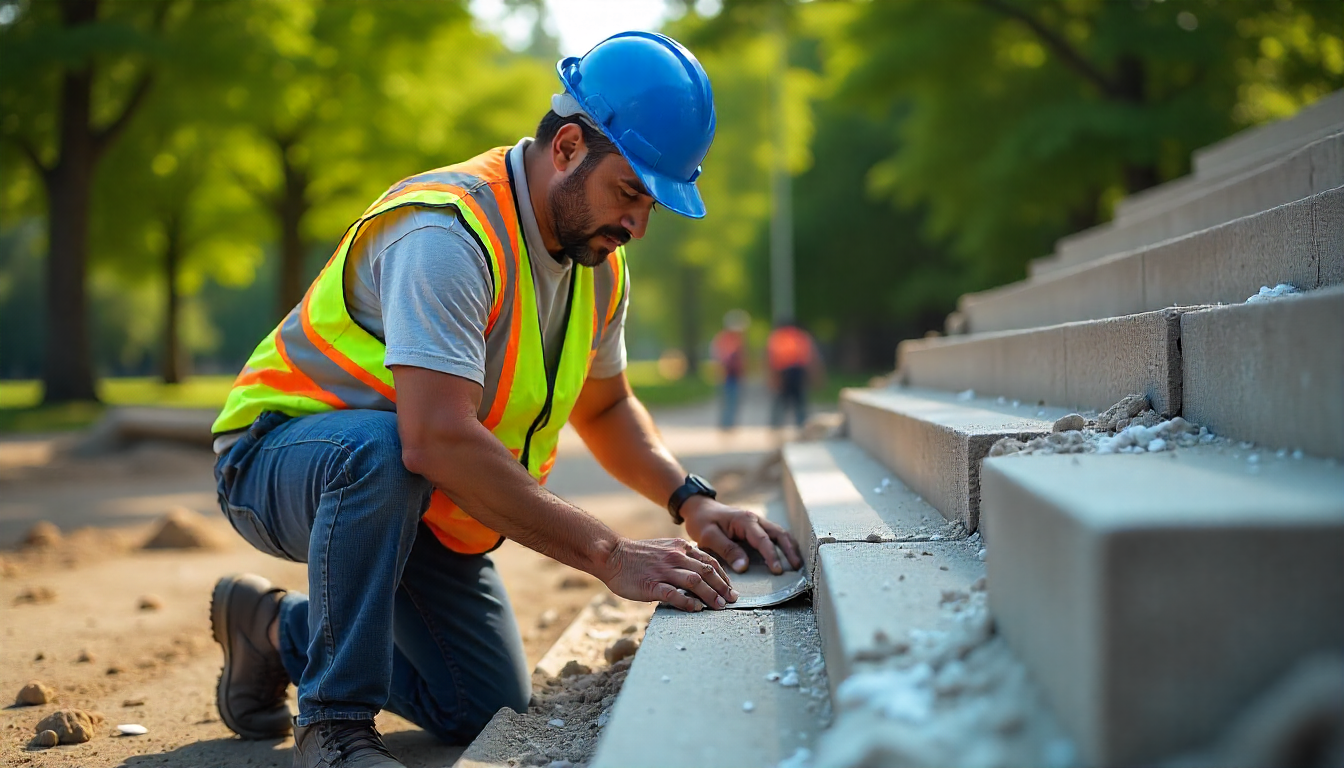
Concrete stairs can be either poured in place or pre cast. They are extremely durable, low maintenance, and fire resistant. Their heavy, solid nature provides a sense of permanence and strength. The visual appeal of concrete can be manipulated with different finishes, such as a polished surface for a contemporary look or a colored or stamped finish to mimic stone. Concrete is a long term, low fuss solution that works well in modern or minimalist homes.
Glass
Glass is a dramatic and modern material used for stairs. It is made from thick, tempered or laminated glass that is surprisingly strong and durable. While glass stairs create a sense of openness and allow light to pass through, they do require more frequent cleaning to maintain their visual appeal. Glass is often used for stair treads and railings, creating an illusion of floating steps and a light, airy feeling in the space.
Construction and Safety
The structural integrity and safety of a staircase are paramount. Proper construction involves understanding the key components and adhering to established building codes.
Key Components
A staircase is a system of interconnected parts. The treads are the horizontal surfaces you step on. The risers are the vertical elements between each tread. The stringers are the structural supports on either side of the staircase that hold the treads and risers in place. The railing system includes the handrail, which provides a grip for support, and the guardrail, which prevents falls from the side of the staircase.
Calculating Rise and Run
The relationship between the riser height and the tread depth, known as rise and run, is crucial for creating a comfortable staircase. If the rise is too high or the run is too short, the stairs will be difficult and unsafe to climb. A common rule of thumb for residential stairs is that the sum of two risers and one tread should equal approximately 25 inches. This ensures that each step is a comfortable and predictable length for a typical stride. All risers in a flight of stairs must have the same height to prevent a tripping hazard.
Building Codes and Regulations
Local building codes and standards are designed to ensure safety and prevent accidents. These codes specify the maximum height of a riser, the minimum depth of a tread, the height of handrails, and the required spacing between balusters or vertical elements in a guardrail. For instance, most codes require that a 4 inch sphere cannot pass through any opening in the guardrail to prevent children from falling. Adhering to these codes is a non negotiable part of building a safe and legal staircase.
Design and Aesthetics
A staircase can be a powerful design tool, transforming a simple functional element into a stunning visual centerpiece.
Integrating Stairs into a Home's Decor
The staircase can be a focal point of a room or it can be designed to blend into the background. A grand, open staircase can be the first thing a visitor sees, setting the tone for the entire home. Alternatively, a staircase can be tucked away or designed to be minimalist to maximize the usable living space. The area under the stairs can be used creatively for storage, a reading nook, a small bathroom, or even a miniature office.
Lighting, Color, and Material Choices
Lighting is essential for both safety and aesthetics. Steps can be illuminated with integrated lights to highlight each tread and prevent missteps. Color can be used to make the staircase stand out or recede. A dark staircase can create a dramatic statement, while a light colored one can make a space feel more open and airy. The choice of materials and the combination of different materials can also create visual interest. For instance, a staircase with rich wood treads and a sleek glass railing combines warmth and modernity.
Examples of Different Design Styles
A modern staircase might feature a simple, minimalist design with a floating appearance, often constructed from materials like steel and glass. A traditional staircase might have an ornate design with a sweeping curve, detailed wooden spindles, and a polished handrail. A rustic staircase would use natural materials like reclaimed wood and stone, with a focus on simplicity and earthy tones that reflect a connection to nature. Each of these styles can be customized to fit the unique character of a home.
Final Considerations and Conclusion
A staircase is a complex and highly specialized element of a building project. It requires a careful balance of engineering, safety, and design. While this guide provides an overview of the key concepts, the most important step for any homeowner or builder is to seek professional advice. A qualified architect or contractor can help you navigate the complexities of building codes, ensuring that your staircase is not only beautiful but also structurally sound and safe. Building a staircase is a journey, and with proper planning and execution, it can be a rewarding part of creating a home that is both functional and beautiful.