
Choosing the right surface for a wet area is about more than just looks. Whether you’re planning a new pool deck, renovating an outdoor patio, or designing a stylish bathroom, the finish you select has a huge impact on safety, durability, and how much work it will be to maintain. A great concrete finish can transform a simple slab into a beautiful, functional surface that stands up to water, foot traffic, and the elements.
From highly decorative options to simple, practical solutions, this guide will walk you through the most effective and attractive concrete finishes for any wet zone, helping you find the perfect balance between safety and style. We'll explore everything from stamped concrete's popular texture to the broom finish's classic, no-nonsense appeal.
The Role of Concrete Finishes in Wet Areas
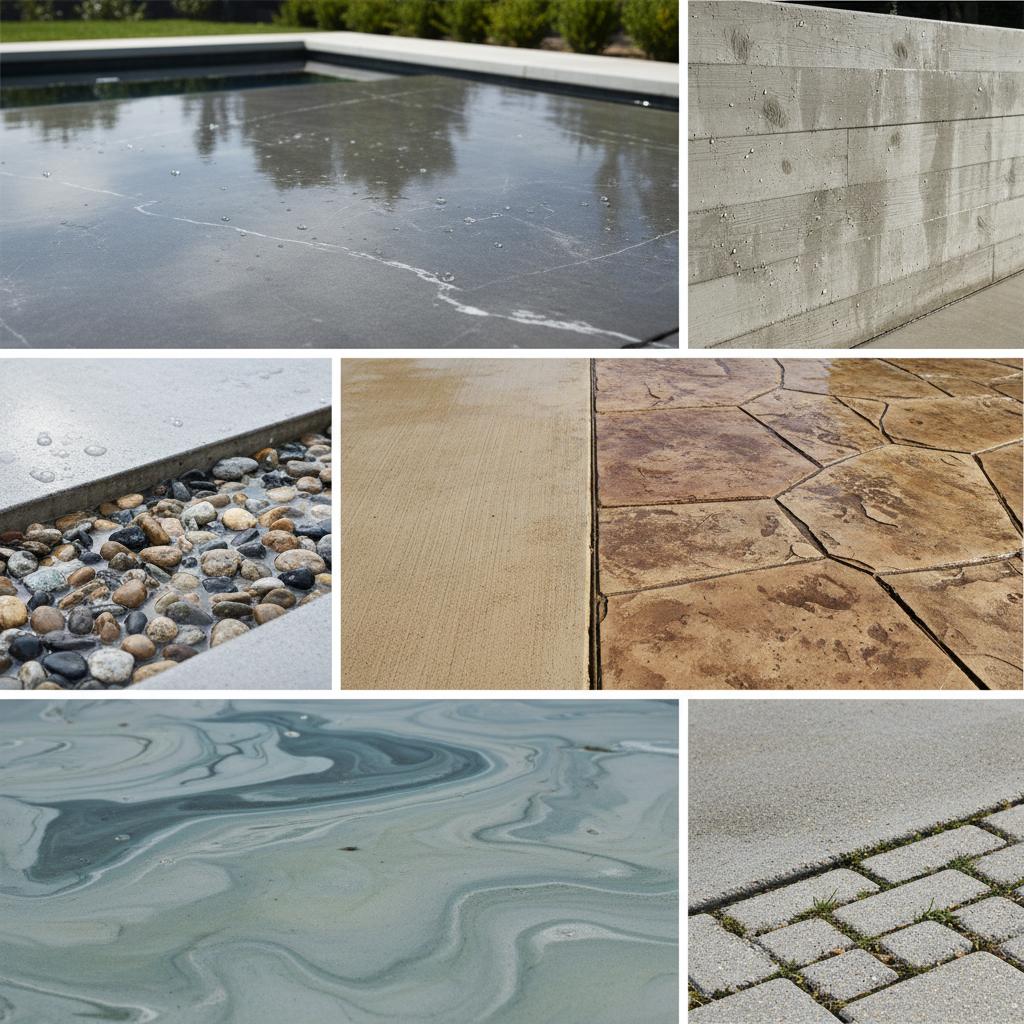
The finish on a concrete surface isn’t just a final touch; it’s a critical design and safety feature, especially in places where water is present. The texture of the concrete directly affects its traction, or how much grip it provides. This is essential for preventing slips and falls on a pool deck, a wet outdoor walkway, or a bathroom floor. A smooth, slick surface might look modern, but it can become a serious hazard when wet. A textured surface, on the other hand, provides the friction needed to make the area safe.
Beyond safety, the finish also plays a vital role in water management. Some finishes are designed to shed water efficiently, while others are more porous. The way a finish handles moisture also affects its long-term durability. Standing water can lead to algae growth, staining, or even damage to the concrete over time, so a finish that helps water drain away is a big plus. Common wet areas like pool decks are a great example of where this matters most, as they see constant splashing.
Bathrooms, patios, and outdoor steps all face similar challenges, requiring a finish that can withstand moisture and provide reliable performance for years to come. Understanding these roles helps homeowners, builders, and property managers make an informed choice that balances safety with style.
Exploring the Best Finishes
Stamped Concrete
Stamped concrete is one of the most popular and versatile decorative finishes available. It’s created by pressing a pattern or texture into freshly poured concrete. This can mimic the look of more expensive materials like brick, stone, wood, or even tile. The process involves laying a base color, applying a release agent to prevent the stamps from sticking, and then pressing the stamps into the concrete before it fully hardens. The result is a highly customized surface that offers a high-end look without the high-end price.
One of the main benefits of stamped concrete is its incredible decorative appeal. It allows you to create a unique aesthetic that complements your home or landscape. With a wide range of patterns and colors, the design possibilities are nearly endless.
When it comes to wet areas, stamped concrete can provide good traction, especially if the texture is deep and the surface is properly sealed. A non-slip additive can be mixed into the sealer to further enhance its grip. This makes stamped concrete a great option for pool decks and patios where you want both beauty and safety.
However, stamped concrete does have a few limitations. The surface needs to be resealed periodically, typically every 2-3 years, to maintain its color and protective layer. If the sealer wears off, the surface can become slick, and the color may fade. Another potential issue is that if the stamp pattern is very shallow or has wide, flat areas, it might not provide enough slip resistance when wet. It's crucial to choose a pattern with a defined texture and to ensure a non-slip additive is used with the sealer. Despite these points, its versatility and style make stamped concrete a top choice for pool decks, patios, and outdoor walkways where you want a truly custom look.
Exposed Aggregate
Exposed aggregate is a classic concrete finish known for its rugged texture and natural beauty. It’s created by removing the top layer of concrete paste to reveal the decorative stones, pebbles, or other aggregates embedded just below the surface. This can be done in two main ways: by using a chemical surface retarder that slows down the concrete's setting time on the top layer, or by washing and brushing the surface with water at just the right moment after it has been poured. The result is a surface with a unique, tactile texture that looks great and performs even better in wet conditions.
The biggest benefit of exposed aggregate is its superior slip resistance. The rough, stony texture provides excellent grip, making it an ideal choice for high-traffic wet zones. It’s a very durable finish that withstand heavy use and harsh weather. Because it uses natural stones, every exposed aggregate surface is unique, with variations in color and texture depending on the type of aggregate used.
This gives it a natural, earthy appeal that works well in a variety of outdoor settings. There is no better choice for reliable traction for a driveway or a high-use pool deck. Exposed aggregate offers a timeless look that is both functional and aesthetically pleasing.
While exposed aggregate offers many advantages, it's essential to consider a few drawbacks. The rough surface can be uncomfortable on bare feet, which might be a concern for a children's play area or a frequently used pool deck. It also requires a good quality sealer to protect the concrete and keep the aggregate looking its best.
The sealing process helps prevent staining and keeps the pebbles locked in place. Overall, exposed aggregate is an excellent choice for a variety of projects, especially those where safety and durability are the top priorities.
Polished Concrete
Polished concrete is a modern, sophisticated finish that has gained immense popularity for indoor spaces. It’s a process of mechanically grinding the concrete surface with a series of progressively finer diamond-abrasive pads.
This process removes surface imperfections and reveals the natural aggregate within the slab, creating a smooth, reflective surface. The concrete is then treated with a chemical densifier that hardens the surface and a sealer to protect it. The final result can range from a matte finish to a high-gloss, mirror-like shine.
The primary benefits of polished concrete are its sleek, clean look and its ease of maintenance. The dense, hard surface is resistant to spills and staining, making it very easy to wipe clean. It also has a modern aesthetic that works well in contemporary homes and commercial spaces. For indoor wet areas like bathrooms, polished concrete offers a seamless and hygienic surface that is free of grout lines. The sleek appearance of polished concrete has made it a favorite for basements and kitchens as well.
Despite its benefits, polished concrete can be quite slippery when wet if it is not treated with an anti-slip product. For this reason, it is not recommended for outdoor areas or pool decks without specific additives.
To make it safer for bathrooms and other indoor wet spaces, installers will add a non-slip agent to the final sealer or apply a special anti-slip coating. This creates a microscopic texture that provides grip without compromising the smooth appearance. A properly finished and sealed polished concrete floor is a great option for a bathroom or spa where you want a high-end, minimalist look that is easy to clean.
Broom Finish
A broom finish is a simple, cost-effective, and highly functional finish for concrete. As its name suggests, it is created by pulling a stiff-bristled broom across the surface of the wet concrete after it has been floated and leveled. The result is a series of fine lines and grooves that provide excellent traction. The texture can be varied by using a different type of broom or by changing the direction of the strokes. It can be a very simple and straightforward finish, making it a favorite for many builders and homeowners.
The main advantage of a broom finish is its superior slip resistance. The textured surface ensures a firm grip, even when wet. This makes it an ideal choice for outdoor walkways, steps, patios, and pool surrounds where safety is a primary concern. It is also one of the most affordable concrete finishes because it requires no special tools, materials, or advanced techniques.
The simplicity of a broom finish makes it a practical and reliable choice that is easy to maintain. A classic broom finish is perfect for a busy household where durability and safety are the top priorities.
The biggest limitation of a broom finish is its basic appearance. Unlike stamped concrete or exposed aggregate, it doesn't offer a lot of decorative appeal. While it is highly functional, it has a simple, utilitarian look. However, for some projects, this simple aesthetic is exactly what is needed.
You can improve its look by combining it with other finishes or using different broom patterns. For instance, a border of stamped concrete could surround a broom finish patio to add visual interest. Overall, the broom finish remains a go-to option for projects where functionality and budget are the main drivers.
Troweled vs. Float Finish
When finishing a concrete slab, a trowel and a float are two of the most essential tools used to smooth the surface. A float finish is the first step after the concrete is poured. A float—a tool with a flat, wide surface—is used to level the concrete, embed the large aggregate pieces just below the surface, and bring the cement paste to the top. This creates a relatively smooth but slightly coarse texture. A float finish on its own is suitable for areas that will be covered, or where a bit of texture is needed for slip resistance, such as a garage floor.
A troweled finish, on the other hand, is applied after the floating process. It uses a trowel, a smaller, handheld tool, to create a much smoother, denser surface. Troweling compacts the surface, making it extremely flat and hard. It’s what gives a concrete floor its signature smooth, glassy appearance. There are different levels of troweled finishes, from a light trowel that leaves a bit of texture to a hard trowel that creates a very smooth, dense, and durable surface.
In wet environments, the difference between these two finishes is crucial. A float finish provides a good amount of natural texture and is a great base for applying other finishes, like a broom finish. A troweled finish, especially a hard trowel finish, is too smooth and can become extremely slippery when wet.
Therefore, a purely troweled finish is not recommended for outdoor patios, pool decks, or bathrooms unless a non-slip coating or sealer is applied afterwards. The coarse texture of a float finish is much safer. For outdoor applications, a float finish is often a precursor to a broom finish, while indoors, a light troweled finish might be used in a garage or basement, but a float finish is a safer starting point for most wet areas. The key is to avoid a hard trowel finish in any area where water is likely to be present.
Making the Right Choice
Comparing Finishes for Safety and Style
Choosing the right concrete finish for a wet area requires balancing safety and aesthetics. When it comes to traction, some finishes are naturally better than others. Exposed aggregate is arguably the top choice for slip resistance due to its very rough, textured surface. Broom finish is also a champion in this category, offering reliable grip at a very low cost. Stamped concrete can provide good traction, but it depends heavily on the pattern chosen and the use of a non-slip sealer. A troweled vs. float finish comparison clearly shows that a float finish is the safer, more textured starting point, while a hard trowel finish should be avoided in wet areas unless treated. Polished concrete, while stunning, is the most prone to slipperiness and absolutely requires an anti-slip additive.
Aesthetics and cost also play a big role. Stamped concrete offers the most decorative flexibility, allowing you to mimic a wide range of looks, but it comes at a higher price. Exposed aggregate offers a beautiful, natural texture that fits well with many landscaping styles and is typically a mid-range option.
A broom finish is the most budget-friendly choice, providing a classic, simple look. Polished concrete is a premium finish, best suited for indoor applications where a sleek, modern look is desired. The choice between a Troweled vs. Float Finish is often a decision between a smoother and rougher starting point, which in turn affects the final look and safety.
Maintenance and Longevity in Wet Areas
The longevity of a concrete finish in a wet area is directly tied to how well you maintain it. Sealing is the most important step for almost all concrete finishes. A high-quality sealer protects the surface from water damage, stains, and the freeze-thaw cycle. For decorative finishes like stamped concrete and exposed aggregate, regular resealing every few years is crucial to maintain their appearance and protective qualities. The sealer also provides a layer of protection that helps prevent the color from fading.
Cleaning is another key aspect of maintenance. In wet areas, dirt, leaves, and other debris can trap moisture, leading to mold and mildew growth. Regular sweeping and occasional pressure washing can keep the surface clean and prevent it from becoming slick. Polished concrete is the easiest to clean, requiring only a simple mop and a neutral cleaner.
Repairing cracks or chips promptly is also important for maintaining the integrity of the surface. A concrete surface with a broom finish is very easy to repair and maintain because of its simple design. A well-maintained concrete finish will look great and provide reliable slip resistance for a long time.
FAQs
Is Polished concrete too slippery for bathrooms or kitchens?
Polished concrete can be very slippery when wet. While it looks great, it is not recommended for wet areas without the addition of a non-slip additive in the sealer. This additive creates a microscopic grit that provides traction without affecting the polished look. When treated properly, polished concrete can be a safe and beautiful choice for a bathroom or kitchen, but the extra step is absolutely necessary.
Which is safer for pool areas: Exposed Aggregate or Broom Finish?
Both exposed aggregate and a broom finish are excellent choices for pool areas due to their high slip resistance. Exposed aggregate offers a more decorative and durable surface, with the natural texture of the pebbles providing a lot of grip. A broom finish is a more basic, cost-effective option that also provides excellent traction. For maximum safety, you can’t go wrong with either, but exposed aggregate has a bit more visual interest.
Does Stamped Concrete need sealing more often in wet areas?
Yes, stamped concrete in wet areas, especially pool decks and patios, may need resealing more often than in dry areas. Constant water, chemicals, and sunlight exposure can cause the sealer to wear down more quickly. Inspecting the surface annually and planning to reseal every 2-3 years to ensure the color remains vibrant and the surface maintains its protective and non-slip properties.
How do I decide between a Troweled vs. Float Finish for outdoor patios?
For an outdoor patio, you should almost always choose a float finish over a troweled finish. A float finish leaves a rougher, more textured surface that provides much better traction, especially when wet from rain or splashes. A troweled finish, which is very smooth, is not suitable for outdoor use and can become dangerously slippery. A float finish is often the base for a broom finish, which provides even more grip.
Can I combine Stamped Concrete borders with Broom Finish interiors?
Yes, this is a very popular design choice. Combining a decorative stamped concrete border with a practical broom finish interior gives you the best of both worlds. You get the visual appeal of a custom-stamped border while the main walking area remains safe and highly slip-resistant. This combination is a great way to create a high-end look without the added cost of stamping the entire surface.
Conclusion
Choosing the right concrete finish for a wet area is a decision that requires careful thought. It's about finding the perfect blend of safety, function, and style. The finish you choose will not only determine how your space looks but also how it performs and how much work it will be to maintain. From the decorative versatility of stamped concrete to the rugged durability of exposed aggregate, and the simple, reliable grip of a broom finish, there is an option to suit every project.
For pool decks and patios, a broom finish or exposed aggregate offers superior slip resistance, while stamped concrete can provide a custom, high-end look if properly textured and sealed. For indoor spaces like bathrooms, polished concrete offers a modern aesthetic, but it must be treated with a non-slip additive to be safe.
The choice between a Troweled vs. Float Finish is a fundamental one, with the textured float finish being the safer choice for any wet area. Ultimately, the best concrete finish is the one that meets your specific needs, balances safety with style, and matches your commitment to maintenance.