
Why the Truth About Concrete Matters
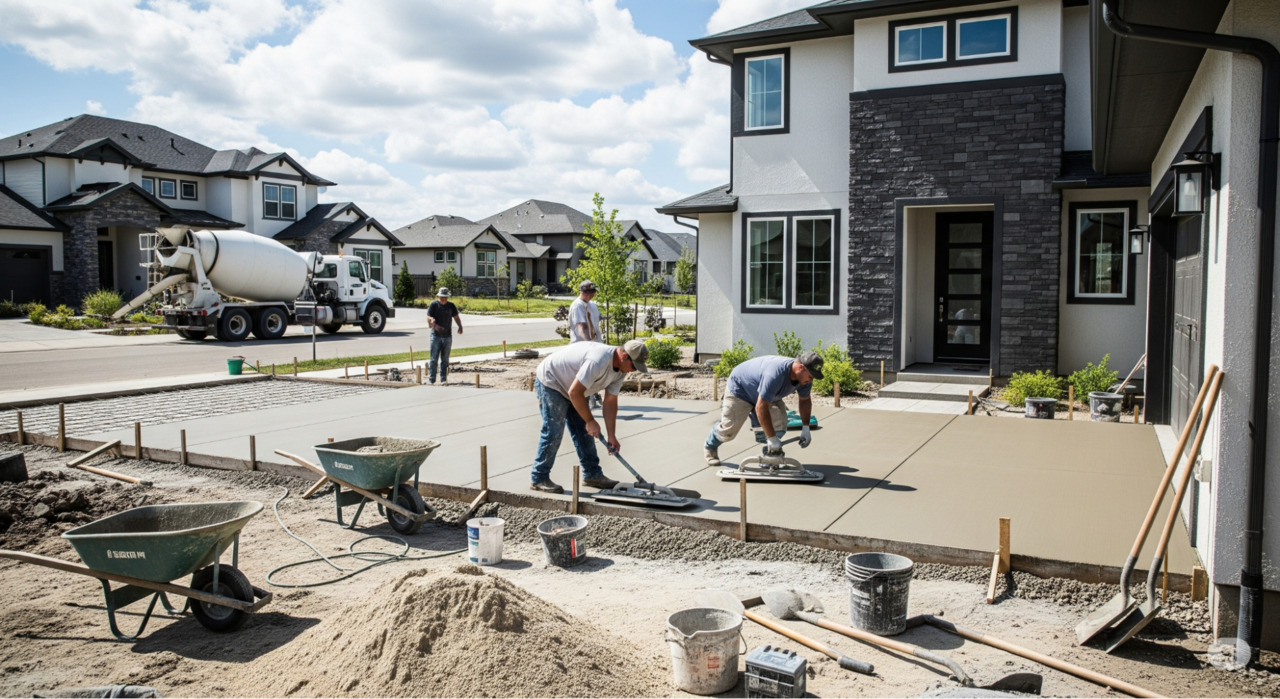
Concrete is everywhere. It forms the foundation of our homes, roads, sidewalks, and driveways. Yet despite being one of the most widely used building materials in the world, concrete is also one of the most misunderstood.
From the belief that all concrete cracks to the assumption that it lasts forever without care, many myths persist among homeowners and even some contractors. These misconceptions can lead to poor decisions, unnecessary expenses, and unmet expectations.
In this guide, we’ll expose the most common myths about concrete, explain the facts behind them, and show you how understanding the truth can lead to better outcomes. If you’re exploring topics like curing, cracking, strength, or project timelines, this article pairs well with the foundational principles found in our broader concrete education series.
Myth 1: “Concrete Always Cracks No Matter What”
This is probably the most repeated statement in the industry, and while it's rooted in some truth, it’s not the whole story. Concrete is prone to cracking because it shrinks as it cures and reacts to temperature changes. But saying that it always cracks implies that cracks are unavoidable and out of your control.
In reality, proper installation practices dramatically reduce the risk and severity of cracking. These include:
- Installing control joints to manage where cracks form
- Ensuring a stable, well-compacted base
- Using the correct mix for the environmental conditions
- Applying proper curing methods over several days
When these practices are followed, cracking is minimal, often invisible, and rarely structural. While some hairline cracks may still appear, they can be anticipated, placed strategically, and controlled. So, no—concrete does not always crack, at least not in ways that matter.
Myth 2: “Concrete Reaches Full Strength in 24 Hours”
Many people think concrete is done curing the day after it’s poured. It may look hard, and you can often walk on it after 24 hours, but that does not mean it's ready for heavy loads or full use.
Concrete continues to cure and gain strength over time. It typically reaches about 70 percent of its design strength in 7 days and full strength in about 28 days. Rushing to drive on it, install heavy structures, or continue construction too early can result in cracks, dusting, and surface damage.
Understanding project timelines helps you plan properly. Even if the slab appears dry on the surface, the internal structure is still developing. Patience during curing can make the difference between a 10-year slab and a 30-year one.
Myth 3: “Concrete Is Maintenance-Free”
Because concrete is so strong and solid, many assume it needs no upkeep. This idea often leads to neglect and premature wear. While it’s true that concrete requires less maintenance than materials like asphalt or wood, it still benefits from care.
Concrete should be:
- Sealed regularly, especially in areas with freeze-thaw cycles or exposure to de-icing chemicals
- Cleaned to remove stains, oil, and dirt buildup
- Inspected annually for small cracks or signs of shifting
- Protected from heavy equipment if not designed for it
Ignoring small issues today can result in major problems later. A neglected crack can allow water into the base, freeze, expand, and cause structural lifting. Routine maintenance is simple, affordable, and highly effective at extending a slab’s life.
Myth 4: “The Strongest Concrete Is the Best”
Another common misunderstanding is that higher strength always equals better quality. While compressive strength is a key factor in mix design, it’s not the only one that matters. Concrete must also be workable, durable, and appropriate for the conditions it will face.
For example, a 6000 psi mix might sound impressive, but if it sets too fast in hot weather or cannot be properly finished, it can result in surface defects. Likewise, using a high-strength mix for a backyard patio may be overkill and increase the risk of cracking without added benefit.
Choosing the right concrete is about balance. The best mix for your project depends on climate, load, placement method, and finish goals. In many cases, a moderate strength mix combined with excellent preparation and curing will outperform a high-strength mix applied incorrectly.
Myth 5: “Reinforcement Prevents Cracking”
Steel reinforcement, whether in the form of rebar or wire mesh, is essential for structural concrete, but it doesn’t stop cracks from forming. Its purpose is to hold cracked concrete together and distribute stress more evenly across the slab. It helps prevent movement along the crack and increases load-bearing capacity.
However, if the slab is improperly cured, poorly jointed, or placed on unstable soil, it can still crack. Reinforcement minimizes the damage, but it does not eliminate the problem entirely.
This myth often leads to overconfidence. Just because a slab has rebar doesn’t mean you can skip base compaction, ignore weather conditions, or rush the pour. Reinforcement is a safety net—not a substitute for proper technique.
Myth 6: “All Concrete Mixes Are the Same”
Not all concrete is created equal. Mixes vary based on water-to-cement ratio, aggregate size, additives, setting times, and intended use. What works for a driveway may fail on a basement floor or exterior walkway.
For example:
- A fast-setting mix might be great for a fence post but too fast for a large slab
- Air-entrained concrete is essential for freeze-thaw environments but unnecessary in warm climates
- High slump mixes are easy to pour but may increase shrinkage and reduce strength if not properly managed
Understanding these variations helps you choose the right product and prevents surprises. Always match the mix to your climate, project type, and finish requirements.
Myth 7: “You Don’t Need a Contractor for Small Jobs”
Many homeowners assume that if the project is small, it’s automatically easy to DIY. But small jobs can be surprisingly complex. Pouring a small patio, for instance, still involves proper grading, forming, mix handling, finishing, and curing.
In fact, small-scale work leaves less room for error. There’s often little margin to adjust slope, disguise mistakes, or compensate for poor finishing. One wrong move can ruin the surface.
While DIY concrete work is possible, it’s important to evaluate the scope of the job realistically. Even small pours benefit from professional oversight, especially when appearance and durability matter. What seems like a weekend project can quickly become a long-term headache if things go wrong.
Myth 8: “You Can Pour Concrete Anytime, Anywhere”
Concrete is sensitive to its environment. Hot weather, cold temperatures, wind, and humidity all affect how it cures and performs. Pouring on a scorching afternoon or in freezing conditions without proper protection leads to cracking, scaling, and weak surface bonds.
For example:
- Hot weather can cause rapid evaporation, leading to shrinkage cracks
- Cold weather slows curing and may prevent proper setting
- Wind accelerates surface drying and increases the risk of curling
Professional contractors adjust mix designs, use windbreaks, sunshades, and thermal blankets, and apply curing compounds as needed. Pouring without regard for the environment is one of the most common causes of failed concrete jobs.
Myth 9: “Cracks Mean the Concrete Is Failing”
Cracks in concrete can be alarming, but they don’t always signal failure. Some cracking is expected as the concrete cures and adjusts to environmental stress. These cracks are often superficial and non-structural.
What matters is the type, location, and pattern of the crack. A hairline crack along a control joint is normal. A wide, uneven crack with shifting sides is not. Learning the difference helps avoid unnecessary concern—or worse, ignoring a problem that needs attention.
Regular inspections and timely crack sealing are part of a good maintenance plan. When in doubt, a structural evaluation provides peace of mind and direction on next steps.
Myth 10: “Once Poured, Concrete Is Done”
This myth suggests that concrete stops changing after the first few days. In reality, concrete continues to cure, shift, and react to its surroundings long after placement.
Factors that affect long-term performance include:
- Moisture exposure
- Freeze-thaw cycles
- Chemical spills
- Structural loads
- Movement of supporting soil
Because concrete evolves, maintenance and monitoring should continue throughout its life. Delaying sealing, ignoring drainage, or overloading a slab prematurely can all cut that lifespan short.
Concrete is durable, but it’s not static. Building a strong foundation means respecting its behavior over time, not just during the pour.
Build on Facts, Not Fiction
Concrete is strong, reliable, and long-lasting when properly planned, installed, and maintained. But myths and half-truths can mislead even well-intentioned homeowners and contractors. Believing that all concrete cracks, that it needs no maintenance, or that high strength guarantees success can lead to disappointment and cost.
Understanding how concrete really works leads to better decisions at every stage—from mix selection and placement to curing and upkeep. It also helps you spot red flags, ask better questions, and work more effectively with contractors.
When you base your choices on real knowledge, you set yourself up for longer-lasting, better-performing surfaces. Whether you’re pouring a new driveway or tackling repairs, make sure facts—not myths—guide your path.