
Concrete has undergone a remarkable transformation. Once seen as a purely functional, utilitarian material, it has emerged as a design favourite for its versatility and surprising beauty. This durable substance now offers homeowners, designers, and builders a canvas for creating stunning, personalised surfaces.
This shift has been driven by innovative finishing techniques that elevate simple concrete into a work of art. Stamping and staining are among the most popular and impactful of these methods. Both techniques can achieve a high-end look and significantly boost a property's appeal, but they do so in very different ways.
For anyone planning a renovation or new build, the choice between stamped and stained concrete is crucial. It impacts the final aesthetic, the installation process, and the long-term maintenance of the surface. To make the right decision, it's essential to understand the unique characteristics, advantages, and ideal applications of each.
This comprehensive guide will help you navigate that choice by comparing these two leading decorative concrete options. We'll explore their creation, appearance, and performance to help you determine which is the perfect match for your project, budget, and design vision.
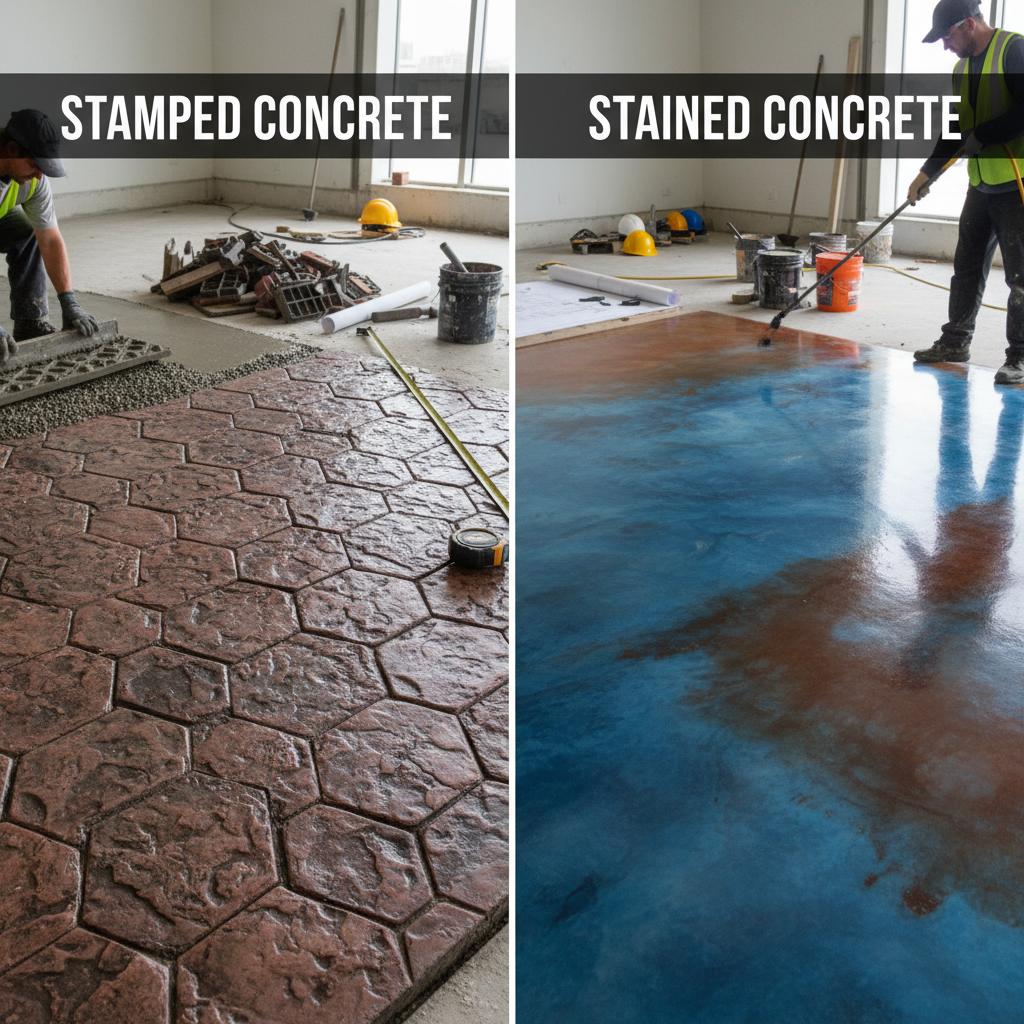
What Is Stamped Concrete?
Stamped concrete is a decorative paving method that expertly replicates the appearance and texture of natural materials, from stone and brick to wood. It offers an affordable way to achieve the intricate look of high-end masonry without the associated costs and complex labour.
The Creation Process
The process of creating stamped concrete is a coordinated and precise effort. It begins with pouring a fresh concrete slab. Once the concrete is poured, a professional crew applies a colour hardener to the surface, followed by a powdered release agent. The hardener provides the base colour, while the release agent prevents the stamping mats from sticking and adds a contrasting highlight that gives the final surface a realistic, antiqued look. While the concrete is still wet and pliable, large, flexible mats with patterns embossed on their underside are pressed firmly into the surface. This imprints the desired texture and pattern, leaving a detailed, three-dimensional finish.
Design Flexibility and Cost
The major appeal of stamped concrete is its incredible design flexibility. A vast range of patterns and textures are available, allowing you to mimic the rustic charm of cobblestone, the formal elegance of slate, or the warm aesthetic of timber planks. This versatility makes a Stamped Concrete surface suitable for a wide array of architectural styles. While the initial investment for a professional stamped installation is higher than a plain concrete slab, it is often far more cost-effective than laying genuine stone or brick. This value proposition makes it a highly attractive option for homeowners looking for a high-impact transformation without breaking the bank.
What Is Stained Concrete?
Stained concrete is an artistic finishing technique that infuses a concrete surface with deep, translucent colour, all while preserving the unique character of the concrete itself. Unlike stamping, staining does not add texture but instead uses the existing surface as a canvas.
Acid-Based vs. Water-Based Stains
There are two primary types of stains used in this process. Acid-based stains contain metallic salts that chemically react with the free lime in the concrete. This reaction creates a mottled, variegated effect, producing rich, earthy tones like browns, greens, and terracottas. The result is always unique, as it depends on the specific mineral content of the concrete. Water-based stains, on the other hand, use fine pigments to colour the concrete. They do not react chemically but instead soak into the concrete's pores. This allows for a much wider range of vibrant colours and more predictable results, making them ideal for complex designs or when a specific colour palette is required.
Durability and Design Potential
The durability of stained concrete is exceptional. Because the colour is absorbed into the concrete rather than sitting on the surface, it will not chip, peel, or fade. This makes it a long-lasting and low-maintenance option for high-traffic areas. The design potential is also immense. Contractors can layer different colours, create intricate patterns by scoring the surface, or even apply artistic motifs. The smooth, seamless appearance of a professionally finished concrete floor provides an organic and sophisticated backdrop that complements both modern and traditional decor.
Stamped vs. Stained: Key Comparisons
Choosing between these two decorative finishes is a significant decision. While both enhance the beauty of concrete, they differ fundamentally in their installation, cost, and final appearance. Here is a quick overview of the key differences to help you weigh your options.
| Feature | Stamped Concrete | Stained Concrete |
| Installation | Labour-intensive, time-sensitive (must be done on new, wet concrete). Requires specialised tools and a skilled crew. | Flexible, can be applied to new or existing concrete. Less labour-intensive. |
| Aesthetic | Mimics natural materials like stone, brick, or timber. Provides a three-dimensional, textured surface. | Infuses the concrete with colour, creating a smooth, translucent, and artistic finish. |
| Cost | Generally more expensive due to specialised labour and materials. | Typically more affordable, especially for existing slabs, as it requires less labour and can be a DIY project. |
| Durability | Excellent, but may show wear on high points. Resilient to heavy use if properly installed and sealed. | Exceptional. The colour penetrates the concrete and does not wear away, peel, or chip. |
| Maintenance | Regular resealing is crucial. Requires cleaning to remove debris from textured grooves. | Easy to clean and maintain. Requires resealing every few years to protect the surface. |
The installation process is a primary point of divergence. Stamped concrete requires a quick and expert hand on a fresh slab, which means the project is a single, concentrated effort. This limits its use for renovations. A stained surface, by contrast, can be applied to a newly poured floor or to an existing slab that has been properly cleaned and prepared. This makes it a fantastic solution for remodelling a basement or updating a tired patio without the need for demolition. The surface preparation is key for both, with a professional Troweled vs. Float Finish creating the ideal base for either method. The choice between a textured or a smooth surface depends entirely on the desired final look. While a Stamped Concrete surface offers realism and texture, a stained surface provides a more seamless, elegant aesthetic.
Design Options and Aesthetic Appeal
The aesthetic you want to achieve is one of the most important factors in choosing between these two finishes. Each option excels at creating a different type of atmosphere and style.
Creating Traditional Looks
Stamped concrete is the undisputed champion for replicating the look of traditional materials. Its ability to convincingly mimic the rustic charm of cobblestone or the sophisticated feel of slate makes it an ideal choice for adding a sense of classic elegance. This finish is perfect for creating a warm, inviting patio or a stately driveway that complements traditional home designs. The texture and pattern add a level of visual interest and dimension that feels both natural and timeless.
Achieving a Modern Aesthetic
Stained concrete is the go-to finish for contemporary, industrial, and minimalist design schemes. Its smooth, seamless surface and vast colour palette allow it to serve as a sleek and artistic backdrop for modern decor. Stained concrete floors in open-plan living areas create a sense of spaciousness and flow, providing a clean, elegant foundation. It’s also the perfect way to add a pop of bold colour or a subtle, organic finish to a space, making it a favourite among architects and designers looking to make a subtle yet powerful statement.
Durability and Maintenance Needs
Both finishes are known for their resilience, but they require different approaches to upkeep to ensure their longevity.
Performance Under Heavy Use
Stamped concrete is tough and durable, especially for outdoor applications like driveways and walkways. The textured surface provides excellent slip resistance, which is a major safety benefit. However, the high points of the pattern may show wear over many years, particularly in areas with heavy foot or vehicle traffic. Stained concrete, on the other hand, is incredibly hard-wearing. Since the colour is an integral part of the concrete, it doesn’t wear away from the surface. A well-sealed stained floor can withstand decades of heavy foot traffic in a commercial setting without losing its colour. For a very simple yet effective non-slip surface, a classic Broom Finish is a great, durable alternative often used for its practical benefits.
Cleaning and Sealing Requirements
Regular maintenance is key for both stamped and stained concrete. Both surfaces must be resealed every few years to protect them from UV damage, moisture, and stains. For a stamped surface, cleaning can be a bit more involved as you may need to use a pressure washer or a stiff broom to get into the grooves and remove any dirt or grime that has collected. Stained concrete, due to its smooth surface, is much easier to clean. A simple mop and mild detergent are all that’s needed to keep an indoor stained floor looking its best.
Where Stamped Concrete Works Best
Stamped concrete is ideally suited for outdoor projects where its texture, durability, and realistic appearance can be fully appreciated.
Ideal Applications
The primary applications for stamped concrete are patios, driveways, walkways, and pool decks. For a patio, a stamped finish that mimics flagstone or pavers can create a stunning and inviting outdoor living space. Driveways benefit from the durability and curb appeal that a cobblestone or brick pattern provides. The textured surface also makes it a safe choice for areas around pools where wet feet are a concern.
Considerations and Limitations
While extremely versatile, a Stamped Concrete surface can have its limitations. It may not be the best choice for very steep slopes, as the intricate patterns can make water flow more complex. Additionally, in climates with harsh freeze-thaw cycles, a stamped surface can be more susceptible to surface chipping if the concrete mixture and sealing process are not expertly executed.
Where Stained Concrete Works Best
Stained concrete is a popular choice for both residential and commercial spaces, particularly those where a sleek and modern look is desired.
Indoor and Commercial Spaces
Stained concrete floors are an excellent solution for indoor spaces such as basements, living areas, and garages. They are incredibly durable, easy to clean, and resistant to moisture, making them a practical and beautiful flooring option for any part of the home. In commercial settings, stained floors are a common sight in restaurants, retail stores, and art galleries, where their unique aesthetic adds a touch of sophistication and style.
Colour Versatility and Longevity
One of the greatest advantages of stained concrete is its incredible colour versatility. It can be customised to match any design palette, from subtle neutrals to dramatic jewel tones. The longevity of a properly sealed stained floor is also unmatched. The colour penetrates deep into the surface, becoming a permanent part of the concrete itself, which means it will not peel or chip off. For an even more durable and low-maintenance option, a Polished stained concrete floor is the ultimate choice, offering a hard, glass-like finish that resists stains and scuffs with ease.
Other Concrete Finishing Alternatives
While stamped and stained concrete are excellent choices, homeowners have other fantastic options to consider, each offering a unique look and feel.
Exposed Aggregate
A classic and timeless option is Exposed Aggregate. This finish involves a process where the top layer of cement paste is removed, revealing the beautiful, naturally coloured stones or aggregates within the concrete mix. This creates a highly textured, durable, and non-slip surface that is perfect for driveways, footpaths, and pool surrounds. Its rustic charm and natural appeal make it a popular choice.
Polished Concrete
For the ultimate in modern, sleek design, polished concrete is the answer. This method involves using diamond grinding tools to grind the concrete's surface to a desired level of smoothness and shine. It's a low-maintenance, dust-resistant, and incredibly durable option that is perfect for a minimalist interior or a commercial space.
Broom Finish and Beyond
A simple Broom Finish is created by running a stiff-bristled broom across a freshly floated surface. This leaves behind a series of fine, parallel lines that provide excellent traction. While not as decorative, it is a highly functional and widely used finish for sidewalks, garages, and driveways. The choice of finish, from a Troweled vs. Float Finish at the very beginning of the project to the final decorative touch, dictates the ultimate look and feel of your concrete surface.
Cost and Value Considerations
When planning a project, it is essential to look at both the initial investment and the long-term value provided by each decorative concrete method.
Initial Investment
In most cases, stamped concrete has a higher upfront cost than stained concrete. The difference is primarily due to the labour-intensive nature of the installation and the need for specialised stamps and colour hardeners. For those on a tight budget, staining an existing slab can be a very cost-effective way to get a completely new look without the expense of a new concrete pour.
Long-Term Value
Both stamped and stained concrete can significantly increase the aesthetic appeal and resale value of a property. A well-executed Exposed Aggregate driveway, for example, signals quality and durability to potential buyers. A sophisticated stained floor indoors can be a major selling point. The long-term value of either finish is directly tied to the quality of the installation and a commitment to proper, regular maintenance, especially resealing.
Making the Right Choice for Your Project
Selecting the right decorative concrete finish is a personal decision that should be based on a clear understanding of your needs and preferences.
Key Factors to Consider
Before making your final choice, ask yourself a few questions. What is my budget? Is the project indoors or outdoors? What kind of aesthetic am I trying to achieve? How much maintenance am I willing to do? For example, if you want to match a rustic, traditional home design, then stamped concrete is likely the right choice. If you prefer a modern, industrial look for your living room, then stained concrete is the way to go.
Tips for Consulting Professionals
No matter which option you lean towards, consulting with a reputable and experienced concrete contractor is essential. Ask to see a portfolio of their work and get multiple quotes. A skilled contractor can provide valuable insights into what will work best for your specific project, considering factors like climate, soil conditions, and the intended use of the surface.
Conclusion
The world of decorative concrete offers two incredible options for transforming a plain slab into a stunning feature. Stamped concrete provides a high-impact, textured finish that flawlessly mimics the look of expensive natural materials like stone and brick. It is the perfect choice for outdoor spaces where you want to add an air of rustic elegance and timeless charm.
In contrast, stained concrete offers a smooth, artistic, and unique finish that celebrates the natural beauty of the material itself. Its colour versatility and low-maintenance nature make it a top contender for stylish, durable indoor and commercial flooring. The beauty of concrete lies in its ability to adapt to almost any design aesthetic.
Ultimately, there is no single "best" option between stamped and stained concrete. The ideal choice depends on your specific goals. By considering your budget, the intended use of the space, and the overall design vision for your home, you can confidently select the finish that will not only meet your needs but also exceed your expectations, creating a beautiful and lasting impression.