
As global concerns about climate change and environmental degradation continue to grow, the construction industry is under increasing pressure to find sustainable solutions. Concrete, being the most widely used construction material on the planet, plays a significant role in this conversation. Traditional concrete production contributes substantially to carbon emissions, resource depletion, and landfill waste. Yet with growing innovation and better understanding of material science, more sustainable options are now available.
Sustainable concrete doesn’t mean sacrificing strength or longevity. Instead, it involves smarter choices—from raw material selection to reinforcement strategies. It’s about reducing the environmental burden while still delivering the performance that construction projects demand. These options are becoming more viable, affordable, and common in both residential and commercial settings.
Whether you’re a contractor, builder, engineer, or environmentally conscious homeowner, this article walks you through some of the most promising sustainable concrete materials and methods available today.
Understanding Sustainability in Concrete
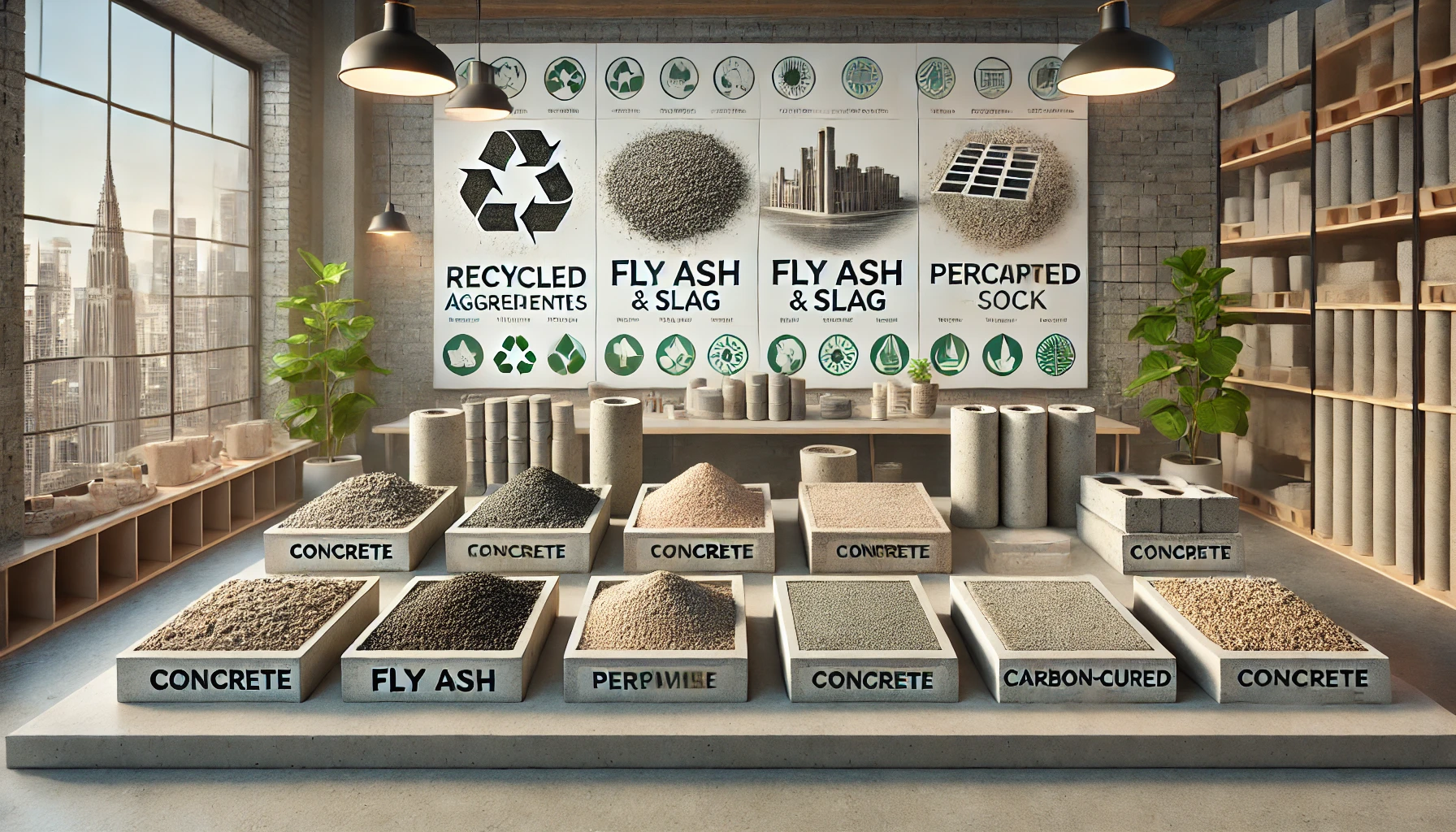
Sustainable concrete revolves around several goals: reducing greenhouse gas emissions, minimising energy consumption, lowering water usage, and increasing the use of recycled or renewable resources. Achieving these objectives often requires a shift in how concrete is mixed, reinforced, placed, and cured.
The cement component of concrete is especially carbon-intensive. Cement production alone accounts for roughly 8% of global carbon emissions. Reducing the cement content through substitutions and better mix efficiency can make a substantial difference. Additionally, using recycled aggregates, alternative reinforcements, and smart design practices all contribute to better environmental outcomes.
Alternative Cementitious Materials (SCMs)
One of the most impactful ways to improve sustainability in concrete materials is by replacing a portion of Portland cement with supplementary cementitious materials (SCMs). These industrial by-products or natural materials can improve concrete’s properties while significantly reducing its environmental footprint.
Fly Ash and Slag
Fly ash, a residue from coal combustion, and slag cement, a by-product of steel production, are widely accepted as partial cement replacements. When added to concrete, they reduce cement demand, lower costs, and improve long-term durability and chemical resistance. Fly ash also slows down setting time, which can be beneficial in hot climates.
Silica Fume and Natural Pozzolans
Silica fume is another industrial by-product known for enhancing strength and durability in high-performance applications. Natural pozzolans like calcined clay or volcanic ash also serve as viable SCMs. These materials reduce permeability and improve resistance to sulphate attack and alkali-silica reaction.
Incorporating these materials benefits the environment and can also yield better concrete performance, especially when tailored to specific conditions.
Recycled Aggregates and Industrial Waste
The extraction and transportation of natural aggregates require significant energy and disrupt local ecosystems. Replacing virgin aggregates with recycled or reclaimed materials is a simple but effective way to reduce impact.
Recycled Concrete Aggregate (RCA)
One of the most commonly used recycled materials in concrete is crushed concrete from demolished structures. RCA can directly replace gravel in non-structural applications such as pavements, sub-bases, and sidewalks. With proper screening and grading, RCA can even be used in structural applications in some cases.
Industrial Waste as Aggregate
Materials like crushed glass, foundry sand, and even plastic waste have been investigated as partial aggregate replacements. While not yet mainstream, these options promise to reduce landfill waste and promote a circular economy in construction.
Using Locally Sourced Materials
Transportation is a hidden environmental cost often overlooked in concrete construction. Sourcing materials locally not only reduces emissions from fuel use but also supports regional economies. Many local SCMs or recycled aggregates may already meet project requirements with less energy expenditure than distant alternatives.
When comparing suppliers, it’s worth asking how far materials must travel and whether regional alternatives are available that match performance expectations.
High-Performance Concrete with Leaner Mixes
Modern concrete technology allows for greater control over mix design, enabling lower cement content while maintaining strength. Properly designed mixes that balance water, aggregates, and binders can outperform traditional mixes on both sustainability and performance metrics.
Understanding mix ratios is key to achieving a lean and effective concrete design. Too much cement increases carbon output and cost unnecessarily. A well-balanced ratio optimises the intended application's workability, durability, and strength.
Using chemical admixtures such as water reducers, superplasticisers, and air entraining agents can further improve mix efficiency without requiring more cement.
Green Reinforcement Strategies
Reinforcement is critical to concrete’s structural performance, but traditional steel bars are energy-intensive to produce and susceptible to corrosion. Exploring alternative reinforcement options helps enhance sustainability while maintaining durability.
When comparing fiber vs rebar, fiber-reinforced concrete offers several sustainability benefits. Fibers—made from steel, glass, polypropylene, or other synthetic materials—are dispersed throughout the concrete rather than placed in layers. This allows for more efficient crack control and in some cases, eliminates the need for conventional rebar altogether.
Fiber options require less labour and less material in total, making them attractive for precast and residential projects. While they may not replace rebar in all applications, they significantly reduce environmental impact when used appropriately.
Carbon Capture and CO₂ Mineralisation
Another promising technology is CO₂ mineralisation, where captured carbon dioxide is injected into concrete during mixing. This process chemically transforms CO₂ into a stable mineral within the concrete matrix, essentially locking it in permanently.
Startups and ready-mix producers have begun offering low-carbon concrete using this method, and early data suggests equivalent or improved compressive strength with lower overall emissions. Adoption remains in early stages, but the technology shows strong potential as the market matures.
Permeable and Cool Concrete Surfaces
Sustainability in concrete isn’t just about production; it also includes long-term environmental performance. Permeable concrete, designed to allow water to pass through, reduces surface runoff, promotes groundwater recharge, and alleviates urban flooding.
Similarly, cool concrete surfaces—often achieved with light colours or reflective coatings—help reduce heat island effects in urban environments. These applications contribute to sustainability by supporting broader climate resilience goals.
Durability as a Sustainability Metric
Long-lasting concrete is inherently more sustainable. If a structure lasts twice as long with half the maintenance, fewer raw materials and less energy will be needed over its lifetime. This concept of durability-driven sustainability is critical in both structural and architectural design.
Proper curing, correct reinforcement selection, optimised mix ratios, and environmental adaptability all play roles in making concrete that stands the test of time. Every decision made at the material stage can impact the lifespan and ecological cost of a project.
Lifecycle Thinking in Concrete Design
Sustainable construction isn’t just about individual materials; it requires a lifecycle approach. This means considering environmental impact at every stage—from raw material extraction and transport, to on-site application, maintenance, and eventual demolition.
Designing for deconstruction is an emerging strategy, allowing concrete elements to be reused or recycled instead of ending up in landfill. Similarly, construction waste reduction strategies, such as prefabricated panels and modular slabs, help minimise environmental burden from start to finish.
Industry Shifts Toward Sustainability
Government policies, green building certifications, and corporate ESG goals are all encouraging a shift toward greener materials. LEED and Green Star programs, for example, reward projects that reduce embodied carbon and material waste. As awareness grows, even small developers are incorporating sustainable concrete options into their planning and procurement.
The shift toward sustainable concrete is not a fad—it’s a response to environmental necessity, supported by technological advances and rising consumer expectations.
Conclusion: Practical Steps Toward Greener Concrete
Embracing sustainable options in concrete doesn’t have to be complicated or expensive. In many cases, greener choices align with long-term durability, better performance, and lower maintenance costs. From low-carbon cements and recycled aggregates to efficient mix designs and innovative reinforcements, today’s projects have more tools than ever to minimise their environmental footprint.
Understanding how all concrete materials contribute to sustainability helps professionals and homeowners make informed decisions. Whether you’re developing a large-scale commercial build or replacing a residential slab, sustainable solutions are within reach.
Builders should also consider how design, mix strategies, and material choices intersect. For example, combining smart mix design with alternative reinforcement like fibers or sustainable aggregates can significantly lower environmental impact without sacrificing performance. If you’re curious about reinforcing strategies, comparing traditional steel to modern fiber options will give you insight into the best fit for your project.