
The construction industry is undergoing one of its most dramatic transformations in decades. 3D printed concrete is leading the charge, offering contractors, engineers, and developers new possibilities beyond traditional methods' limitations. Instead of relying on heavy formwork and repetitive manual labour, projects can now be designed digitally and brought to life layer by layer using advanced robotics and specially formulated concrete.
This approach is more than a technological novelty. It has the potential to reshape how Americans think about housing, infrastructure, and even large-scale commercial projects. With urban centres growing and the demand for affordable, sustainable construction increasing, 3D printed concrete provides a path toward faster, safer, and more cost-efficient building practices.
For anyone seeking to understand where modern construction is heading, the broader discussion on concrete technology shows how this innovation fits into a wave of industry-wide change.
How 3D Printed Concrete Works
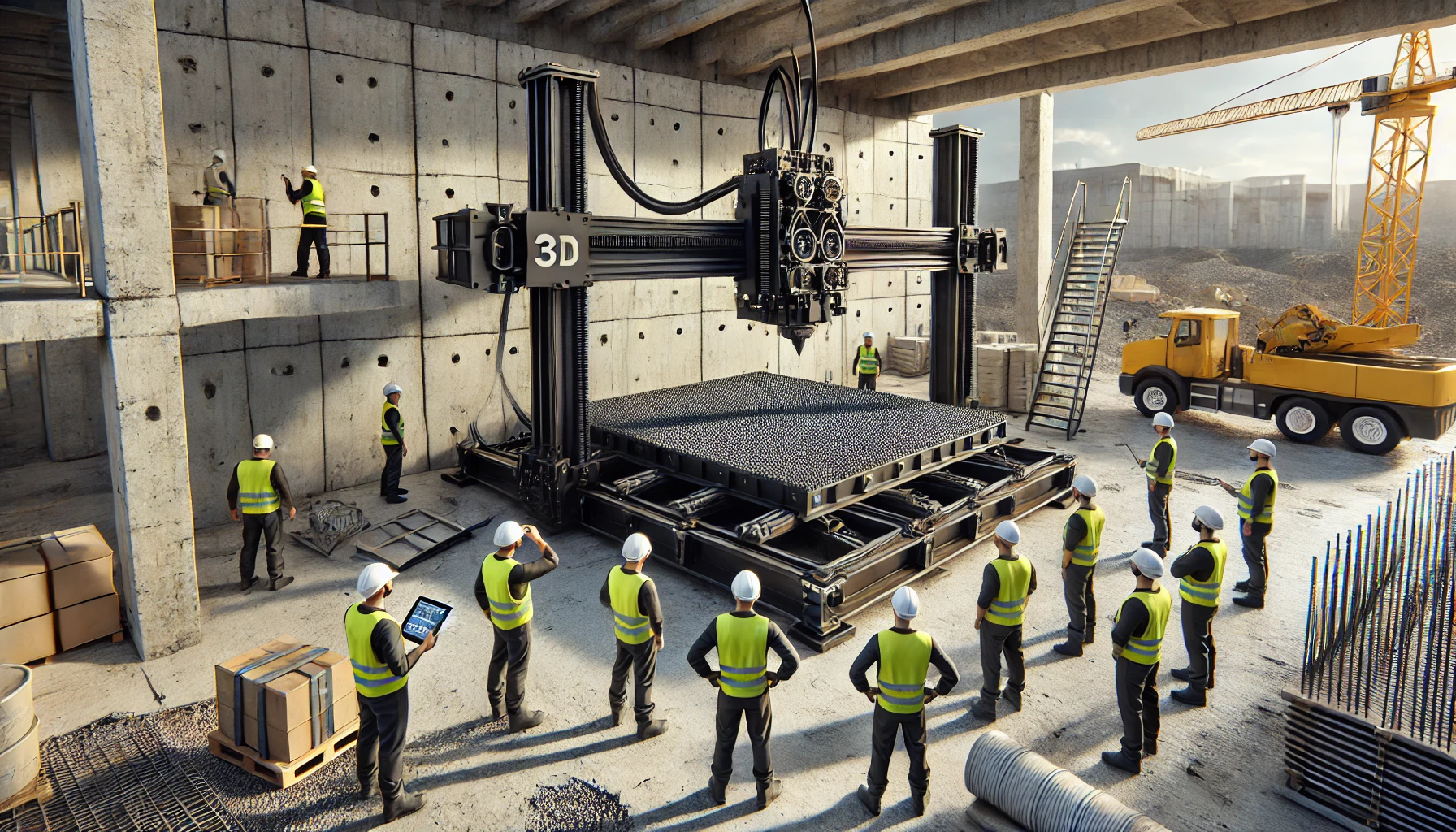
At its core, the process of 3D printing concrete combines three key elements: digital modeling, robotics, and material science.
A designer begins with a CAD or BIM model, which is then broken down into thin layers by software. This “sliced” model becomes the instruction set for a robotic printer, often mounted on a gantry or robotic arm. The printer extrudes a flowable concrete mix through a nozzle, placing it layer by layer to form walls, columns, or other components.
The mix itself is crucial. Unlike traditional concrete that must be poured into forms, 3D printed concrete must be pumpable while also setting quickly enough to support its own weight after extrusion. Special additives and admixtures are used to achieve this balance, allowing the material to harden just fast enough to avoid collapse but not so fast that it clogs the nozzle.
This controlled process creates highly accurate structures without the need for formwork, scaffolding, or large crews.
Benefits Driving Adoption
3D printed concrete is attractive to American contractors for a number of reasons.
Faster build times
Walls that might take several days with traditional pouring and curing can be produced in a fraction of the time. This speed is especially valuable in a country where housing shortages and disaster recovery often demand rapid construction.
Design flexibility
Architects and engineers can experiment with shapes that would otherwise be too costly to form. Curves, free-form structures, and custom textures become practical and affordable.
Reduced labour requirements
Instead of coordinating large teams for formwork, pouring, and finishing, a small crew can operate the printer, monitor the mix, and handle finishing touches. In a labour market where skilled trades are in short supply, this reduction is a major advantage.
Sustainability
Because the printer uses only the required amount of material, waste is significantly reduced. There is also growing interest in combining 3D printed concrete with eco-friendly binders and recycled aggregates. These materials complement advances in self-healing concrete, which together could make future structures more resilient and less resource-intensive.
Cost efficiency
Savings in labour, materials, and time add up. For certain projects, especially standardized housing or community infrastructure, these efficiencies make 3D printing a competitive option.
Technical Challenges
Despite its appeal, there are still hurdles preventing widespread adoption in the U.S.
Building codes and certification
The American construction industry relies on established codes for poured and reinforced concrete. New testing standards are being developed, but it will take time for 3D printed methods to be fully integrated into the codebooks.
Reinforcement
Most buildings require reinforcement to handle loads, especially in seismic zones. Embedding rebar in a printed wall is not straightforward. Engineers are experimenting with ways to combine extrusion with steel, fibers, or post-tensioning systems, but no universal solution has emerged yet.
Durability
Long-term testing is still limited. While laboratory results are promising, questions remain about how printed concrete will perform after decades of freeze-thaw cycles, heavy loads, and weather exposure. Advances in monitoring through smart sensors are helping researchers study real-world performance and address these concerns.
Surface quality
Layered walls often show visible ridges. While some clients may like this textured finish, many projects still require smooth surfaces. Additional plastering or finishing is sometimes necessary, which adds steps back into the process.
Comparing Traditional and 3D Printed Approaches
The differences between conventional concrete work and 3D printing are striking.
| Aspect | Traditional Concreting | 3D Printed Concrete |
| Formwork | Requires extensive manual setup | No formwork required |
| Labour Demand | Large crews needed for pouring and finishing | Small team manages printer and mix |
| Design Flexibility | Limited, especially for curves or custom shapes | High, including organic and free-form designs |
| Project Timeline | Days to weeks depending on complexity | Hours to days for comparable elements |
| Material Waste | Significant, especially with cut-off pours | Minimal, thanks to precision layering |
| Certification | Fully integrated into U.S. codes | Standards still under development |
Opportunities in the U.S. Market
For American contractors, the practical applications of 3D printed concrete are diverse. Housing is one of the most discussed areas, especially affordable housing developments where speed and cost efficiency are critical. Printed wall systems could help address shortages in urban centres or provide rapid shelter in disaster-stricken areas.
Commercial and municipal projects also stand to benefit. Decorative façades, retaining walls, and landscape features can be printed with minimal labour. This not only saves time but also opens creative opportunities for architects.
There are also synergies with other modern materials. For example, combining 3D printing with fast-curing concrete could make structures habitable within days, while integrating systems designed through construction software tools ensures precise planning and cost control.
Practical Steps for Adoption
Companies like AAA Concreting could take several steps to explore the potential of this technology without immediately committing to large-scale projects.
- Pilot projects: Start small with non-structural elements such as planters, benches, or garden walls. These allow testing of mixes, equipment, and workflows in a controlled way.
- Partnerships: Collaborate with universities, research centres, or startups specializing in 3D printing. These partnerships provide access to expertise and help reduce the risk of early adoption.
- Mix development: Develop concrete mixes tailored to local conditions, such as freeze-thaw durability in northern states or heat resistance in the south. These advances will help ensure the longevity of printed structures.
- Staff training: Invest in training crews to manage digital models, operate equipment, and troubleshoot printing processes.
- Marketing and branding: Promote the use of 3D printing as part of a modern, sustainable offering. Clients in both residential and commercial markets are increasingly looking for innovative builders.
Looking to the Future
The next decade will likely bring rapid advancements in 3D printed construction. Mobile printers may become more common, capable of operating on uneven terrain. Multi-material printers could integrate insulation and utilities directly into walls. Sustainability efforts may lead to mixes that include recycled aggregates or carbon-reducing binders.
Technology will also converge. Printed structures monitored with smart sensors can alert owners to damage before it becomes critical. Self-healing concrete could further reduce the need for maintenance, while fast-curing systems shorten construction timelines even more. When tied together with advanced construction software tools, these innovations create a fully digital-to-physical workflow that reshapes how projects are conceived and delivered.
Conclusion
3D printed concrete is one of the most promising frontiers in construction. It offers real advantages in speed, sustainability, cost, and creative freedom, while also presenting challenges that must be addressed before widespread adoption in the U.S.
For American contractors and businesses like AAA Concreting, the opportunity lies in starting small, building expertise, and combining this technology with complementary innovations. By doing so, they can meet client demands for efficiency and sustainability while positioning themselves at the forefront of a new era in construction.