
Choosing the right foundation for your home is one of the most critical decisions you'll make. It’s not just what goes under your house; it affects everything from long-term durability and cost efficiency to how well your driveways, patios, retaining walls, and pool decks integrate with the main foundations of your structure. The slab you choose will impact the structural integrity, your budget, and even future maintenance.
Imagine building a house only to find out years later that the foundations can't handle the local soil, leading to costly repairs. This article will help you understand the two most common slab types: monolithic and T-shaped. We’ll break down their differences, benefits, and drawbacks, helping you make an informed choice for your new construction project in places like Nanyuki, Laikipia County, Kenya, or anywhere else. By the end, you will know which slab is best for your specific needs, climate, and soil conditions.
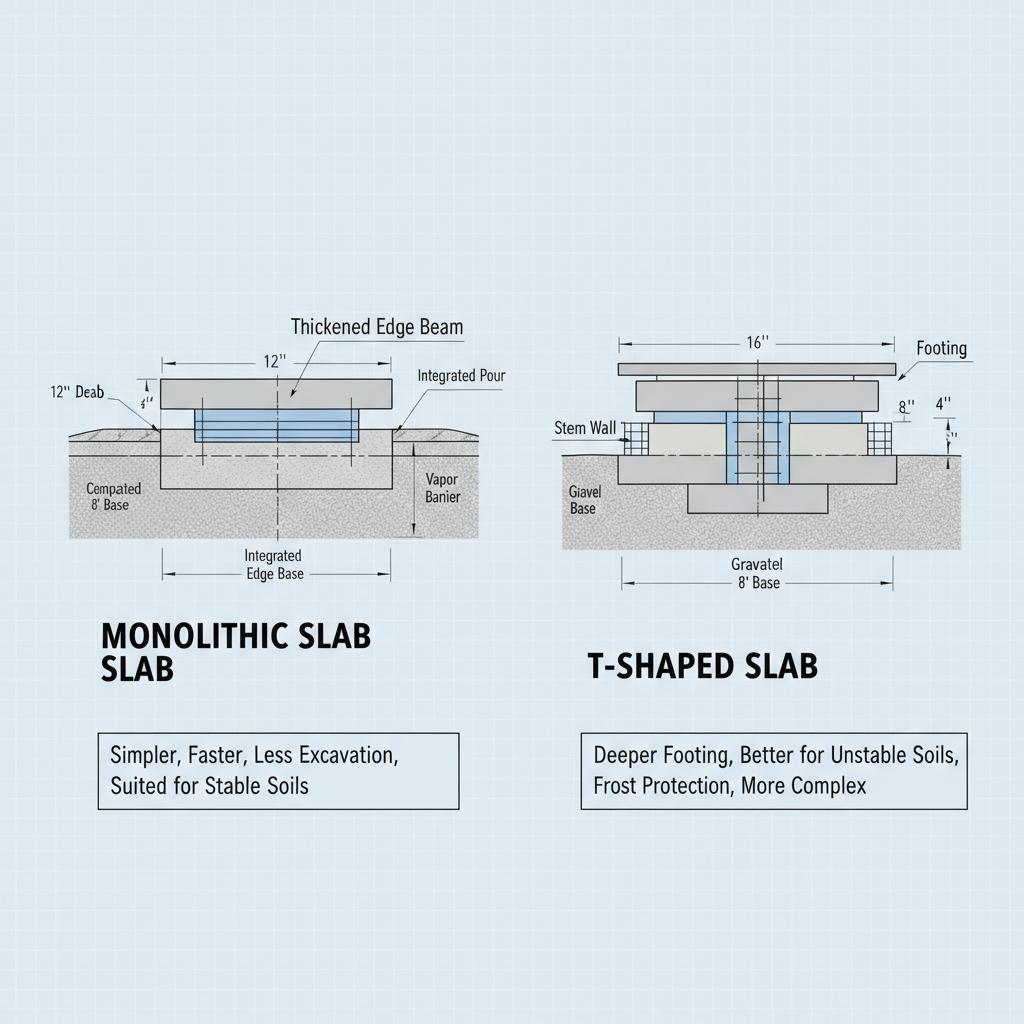
The Role of Slab Foundations
Slab Foundations are essentially large, thick concrete pads that sit directly on the ground. They are a popular choice in residential and light commercial construction because of their simplicity and efficiency. The main job of any foundation is to support the entire weight of the structure above it, distributing that load evenly across the soil. This prevents uneven settling, which can cause cracks in walls, misaligned doors, and other serious structural problems.
A well-built slab foundation acts as the backbone of your home. It provides a stable, level base for all subsequent construction, from the framing to the finishes. In many regions, especially those with warmer climates, slab foundations are favored over crawl spaces or full basements due to their cost-effectiveness and quicker construction times. They offer a solid barrier against ground moisture and pests, and they can also contribute to a home's energy efficiency by providing thermal mass. Understanding their fundamental role is key to appreciating the differences between monolithic and T-shaped options.
Monolithic Slabs Explained
A monolithic slab, also known as a slab-on-grade foundation, is poured all at once. The word "monolithic" means "single stone," which perfectly describes this type of foundation. It’s a single, continuous pour of concrete where the slab and its thickened edges, which act as footings, are formed together. This creates a uniform, integrated Foundations system. In Nanyuki, and other warmer climates with stable, well-drained soils, monolithic slabs are often an excellent choice. They are best suited for areas where the ground does not freeze deeply, as deep frost penetration can cause the ground to heave and potentially crack the slab.
Pros of Monolithic Slabs
Monolithic slabs have several key benefits that make them a popular choice for many projects. They are generally less expensive than T-shaped slabs due to reduced labor and material costs. The single-pour process is also much quicker, speeding up the overall construction timeline. This foundation type requires fewer materials and less formwork, making the construction process simpler and more appealing for small builders and homeowners on a tight budget.
Cons of Monolithic Slabs
Despite their benefits, monolithic slabs have significant drawbacks, particularly in certain environments. They are not ideal in frost-prone areas because their shallow footings don't extend below the frost line, leaving them vulnerable to damage from frost heave. Additionally, they are not practical for supporting full Basements, limiting the home's potential for underground space. Repairing or accessing plumbing lines underneath the slab can also be difficult and costly, as it requires breaking through the concrete.
Monolithic slabs integrate well with other exterior features. Patios can be poured directly adjacent to or even as an extension of the main slab, creating a seamless transition. driveways often connect directly, though an expansion joint is crucial to prevent cracking from differential movement. For Pool Decks, a monolithic pour can create a solid, stable surround. Even small Stairs or steps leading to a raised entry can be formed as part of the monolithic pour, simplifying construction and ensuring stability.
T-Shaped Slabs Explained
A T-shaped slab foundation is a more traditional and robust system, particularly suited for colder climates or areas with less stable soils. Unlike the monolithic slab, it involves a two- or three-stage pouring process. First, footings are dug and poured below the frost line. This ensures the foundation is anchored deep enough to prevent damage from frost heave, a common issue in areas with freezing temperatures. Once the footings cure, concrete walls are built on top of them, and then the slab is poured inside the perimeter of these walls, resting on a compacted fill. The cross-section resembles an upside-down 'T'. For areas in Kenya that experience colder nights or have specific soil challenges, a T-shaped slab offers superior stability. It is specifically designed to resist the forces of expansive soils and frost heave.
Pros of T-Shaped Slabs
The primary advantage of a T-shaped slab is its superior strength and resilience. The deep footings provide excellent protection against frost heave and ground movement, making them ideal for colder climates. This type of foundation is also essential for supporting a full Basement, as it creates the perimeter walls necessary for underground living space. Its robust design is better for handling shifting or expansive clay soils, providing a more stable base for the entire structure.
Cons of T-Shaped Slabs
T-shaped slabs are more complex and costly to build. The multi-stage pouring process takes more time, extending the overall project schedule. This foundation type is generally more expensive due to increased excavation, more materials like concrete and rebar, and a higher labor requirement. The design is more intricate and demands precise execution, often requiring specialized contractors. The extensive formwork needed for both the footings and the foundation walls also adds to the complexity and cost.
T-shaped slabs offer excellent versatility when connecting to other features. Retaining Walls can be seamlessly integrated with the foundation walls, providing a strong, unified structure. Stairs leading into a Basement are a natural fit for this type of foundation. When it comes to adjoining Driveways, the robust nature of the T-shaped foundation ensures a stable connection, though expansion joints are still important to manage movement between the two elements. Its inherent strength makes it suitable for complex landscape designs.
Cost and Construction Timeline
When deciding between monolithic and T-shaped slabs, cost and timeline are often primary considerations for homeowners and builders. The initial outlay and the speed of construction can significantly impact a project's budget and schedule.
Monolithic Slabs: Cost and Time
Monolithic slabs have lower material costs because they require less concrete overall and minimal rebar. Labor costs are also reduced because the single pour means fewer steps and a shorter duration for the crew. The construction timeline is significantly faster; a monolithic slab can often be formed, poured, and cured in a matter of days or a few weeks. This speed can translate into savings on overall project management and interest on construction loans.
T-Shaped Slabs: Cost and Time
T-shaped slabs are generally more expensive due to the higher volume of materials and the greater labor required for the multi-stage pouring process. The need for extensive formwork and deeper excavation also adds to the cost. The construction timeline is slower, with multiple pours each requiring cure time, which can add several weeks to the foundation phase. This extended schedule means more project oversight and coordination.
For a homeowner in Nanyuki planning a simple new home without a basement and on stable soil, a monolithic slab almost always represents the more budget-friendly and quicker option for their foundations. However, if you're building in an area with potential frost issues or require a basement for additional living space, the higher cost and longer timeline of a T-shaped slab are unavoidable investments for long-term structural integrity.
Climate and Soil Considerations
The local climate and soil conditions are paramount when selecting a slab foundation. Ignoring these factors can lead to severe structural issues and costly repairs down the line.
Frost Lines and Heave
The frost line is the maximum depth that ground water is expected to freeze in a given area. When water in the soil freezes, it expands, causing the ground to heave (lift). As it thaws, the ground settles. This repeated freezing and thawing, known as frost heave, can exert immense pressure on Foundations, leading to cracks and uneven settlement if the footings are not deep enough. Monolithic slabs are highly vulnerable to frost heave because their footings are relatively shallow. T-shaped slabs, on the other hand, are designed to extend below the local frost line, anchoring the foundation securely into stable, unfrozen soil and effectively preventing frost heave from affecting the structure above.
Expansive Clay Soils
Some regions have expansive clay soils. These soils absorb water and swell, then shrink when they dry out. This constant swelling and shrinking can put tremendous stress on Foundations, causing them to lift and settle unevenly. Monolithic slabs are more susceptible to damage from expansive soils because their shallower depth offers less resistance to the upward and downward forces. The deeper, heavier footings and robust foundation walls of a T-shaped slab, however, provide greater stability and resistance against the movements of expansive clay soils by distributing the load over a larger, deeper area.
Drainage Issues
Proper drainage is essential regardless of the foundation type to prevent moisture-related problems. For monolithic slabs, good drainage is critical to prevent water from saturating the shallow soil beneath, which could lead to heaving or settlement issues. For T-shaped slabs, it helps protect the foundation walls and prevents hydrostatic pressure from building up. Proper site grading, gutters, and perimeter drains are crucial to divert water away from both types of Foundations.
Considering Nanyuki's specific climate and soil composition is vital. While generally warm, some areas might have specific soil types or microclimates that influence the best foundation choice. Always get a professional soil test.
Durability, Maintenance, and Repairs
The long-term performance, required maintenance, and potential repair processes differ significantly between monolithic and T-shaped slabs. Understanding these aspects helps homeowners anticipate future needs and costs.
Durability
When built correctly on appropriate soil and in a suitable climate, a monolithic slab can be very durable. Its single-pour design makes it strong against downward loads, but its durability is more easily compromised by external factors like frost heave, significant soil settlement, or prolonged moisture exposure. T-shaped slabs are designed for superior durability, especially in challenging conditions. The deep footings and reinforced foundation walls provide exceptional resistance to frost heave and soil movement, making them highly robust and less prone to major structural issues over their lifespan.
Maintenance
Regular maintenance for any slab foundation primarily involves ensuring good drainage. This means keeping gutters clean, maintaining proper grading around the house, and addressing any landscape features that might direct water towards the Foundations. Monolithic slabs may require more frequent visual checks for hairline cracks, especially after extreme weather events. The focus for T-shaped slabs remains on external drainage and inspecting the exposed foundation walls for any signs of cracking or moisture.
Repairs
Repairs for issues like minor cracks in monolithic slabs are typically straightforward. However, if a monolithic slab experiences significant, widespread cracking or uneven settlement due to unsuitable soil, repairs can be much more complex and expensive, possibly involving slab jacking or underpinning. Accessing plumbing or electrical lines embedded within the slab requires breaking through the concrete, a labor-intensive and disruptive process. Major structural repairs are less common with T-shaped slabs because of their inherent strength. The presence of a Basement or crawl space also allows for much easier access to under-slab plumbing and electrical systems, making repairs and modifications significantly less disruptive and costly.
The choice of foundation directly influences the likelihood and complexity of future repairs. While a monolithic slab might be cheaper upfront, potential repair costs if it fails in an unsuitable environment can quickly outweigh initial savings. The robust nature of a T-shaped slab often translates to lower long-term repair risks.
Compatibility with Other Features
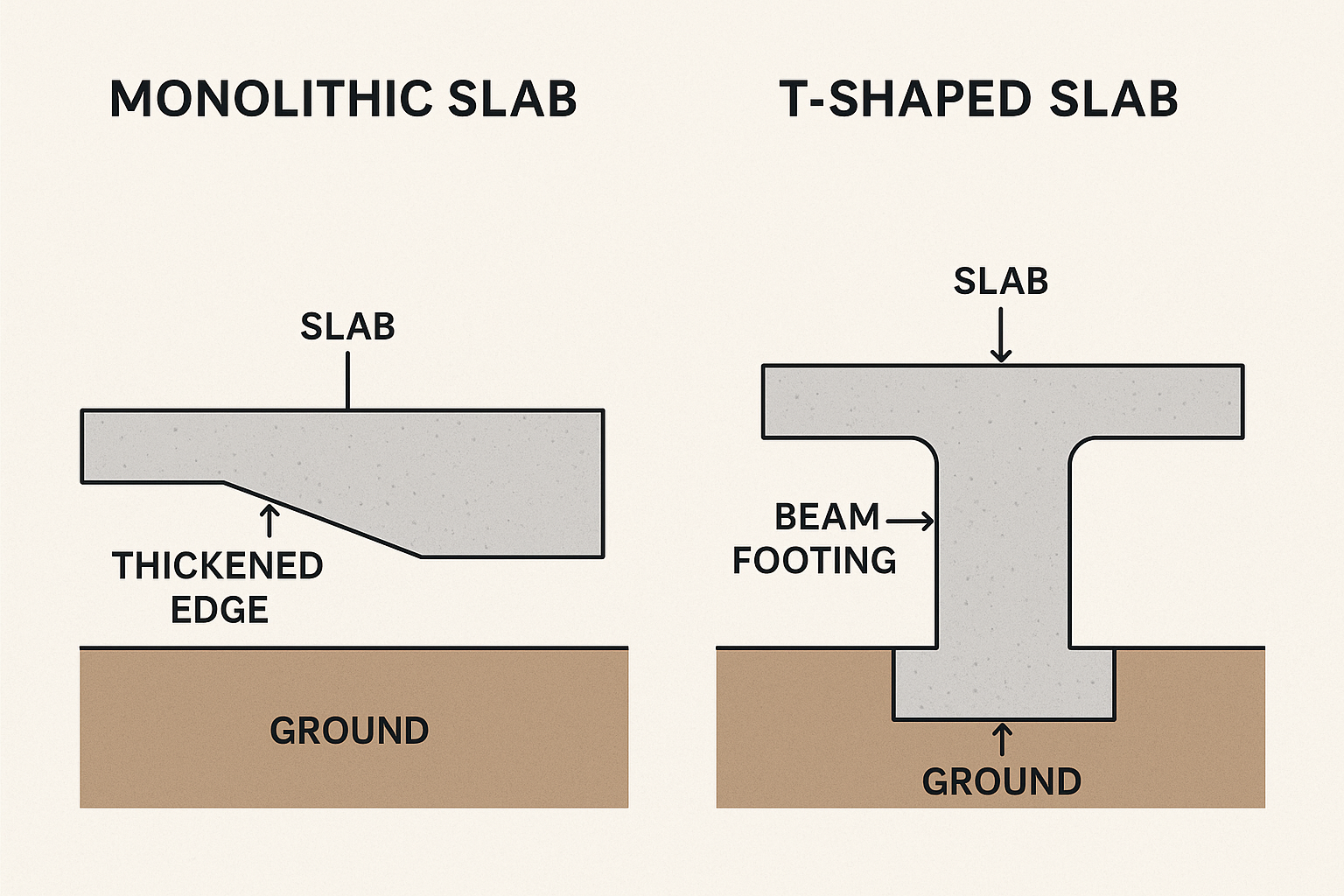
The type of slab foundation you choose significantly impacts how well various exterior and interior features integrate with your home. Thinking about your whole property layout from the start is important.
Driveways and Patios
Driveways connect to both types of foundations with an expansion joint to prevent stress. With monolithic slabs, patios can often be poured as an extension of the main slab, creating a seamless surface. With T-shaped slabs, a Patio is typically a separate pour, which means it is structurally independent and any minor movement won't affect the house's foundation.
Pool Decks and Stairs
For pool decks, a monolithic pour can create a solid, uniform surface around the pool that can be tied into the main house slab. T-shaped slabs would require the Pool Decks to be a separate structure. Simple exterior stairs can be formed and poured as part of a monolithic slab. For interior Stairs leading to a Basement, the T-shaped foundation is essential as it forms the structure for the basement itself.
Retaining Walls
Monolithic slabs are generally not directly integrated with significant retaining walls; if one is needed, it would be a separate structure with its own foundation. T-shaped slabs offer excellent integration with Retaining Walls, especially if the foundation walls themselves act as part of the retaining system. This creates a highly stable and strong combined structure, providing robust support against soil pressure.
Lifespan and Resale Value
The choice of foundation significantly influences both the long-term lifespan of your home and its potential resale value. Investing wisely upfront can pay dividends decades later.
Lifespan
When installed in ideal conditions, a monolithic slab can have a long lifespan, easily matching the life of the structure. However, its lifespan can be drastically shortened if subjected to conditions it was not designed for, such as significant frost heave, expansive soils, or prolonged moisture issues. T-shaped slabs typically offer a longer and more consistent lifespan because they are inherently more resistant to soil movement and frost. This makes them a more resilient and durable choice in diverse environments, contributing to a longer, trouble-free life for the entire home.
Resale Value
A well-chosen and properly constructed foundation enhances a home's resale value significantly. In areas where they are the standard and perform well, monolithic slabs do not negatively impact resale value. However, if a monolithic slab shows signs of distress, it can severely detract from the home's value. T-shaped slabs generally contribute positively to resale value, especially in regions where their advantages are highly valued. A home with a T-shaped foundation offers more usable space, such as a Basement, and superior structural integrity, which are very attractive features for buyers.
Ultimately, choosing the correct foundation for your specific site conditions and long-term plans is an investment in your property's future. It protects the structural integrity of your home, minimizes future maintenance headaches, and preserves or even enhances its resale value.
Choosing the Right Slab for Your Project
Making the final decision requires careful consideration of several factors. Here’s a framework to help you choose the best Foundations for your project.
Climate and Soil Conditions
For warm climates with no frost line and stable, non-expansive soils, a monolithic slab is often a cost-effective and efficient choice. For cold climates with deep frost lines or areas with expansive clay soils, a T-shaped slab is almost always the necessary choice to prevent frost heave and ensure long-term stability. A professional soil test is essential to inform this decision.
Budget and Timeline
A monolithic slab is generally more affordable upfront due to lower material and labor costs, and it has a quicker construction timeline. If you have a limited budget or a tight schedule, this may be the better option. A T-shaped slab, while more expensive initially, offers greater durability and resistance to environmental factors, potentially saving money on future repairs.
Long-Term Plans
If you don't plan to have a Basement or crawl space, a monolithic slab is a suitable option. However, if you desire a Basement or a crawl space for valuable extra space and easier utility access, a T-shaped slab is essential. Consider how easily features like Driveways, Patios, and Retaining Walls integrate with each foundation type to ensure seamless and stable construction.
Questions to Ask Your Contractor
To ensure you make an informed decision and your contractor understands your priorities, here are key questions to ask.
Foundation Suitability
"Based on our site's soil test and local climate in Nanyuki, which slab type do you recommend and why?" This question shows you've done your homework and encourages a detailed explanation. You should also ask, "What are the potential risks or challenges associated with building the recommended slab type on our specific site?"
Cost, Time, and Integration
"Can you provide a detailed cost breakdown for each slab type, and how will the chosen type impact my overall project schedule?" Ask for a clear comparison of material, labor, and excavation costs. Additionally, inquire about how the foundation choice will integrate with your planned Driveways, Patios, and any Retaining Walls.
Maintenance and Future Repairs
Ask your contractor, "What specific measures will you take to ensure proper drainage around the Foundations for long-term durability?" and "How does the choice of foundation affect the installation or future repair of plumbing and electrical lines?" These questions are crucial for understanding the long-term maintenance implications and potential repair costs.
FAQs
Can Monolithic slabs support Basements?
No, monolithic slabs are not designed to support Basements. They are slab-on-grade systems, meaning the floor of the house is at ground level. A Basement requires deeper excavation and substantial perimeter walls, which are characteristics of a T-shaped or similar deep foundation system, not a monolithic pour.
Do T-Shaped slabs work better with Retaining Walls?
Yes, T-shaped slabs generally work much better with Retaining Walls. Their robust, deep foundation walls can be integrated directly with or provide strong support for retaining wall structures. This creates a more stable and unified system, especially for properties with significant grade changes or where the foundation itself acts as a retaining element, like in a walk-out Basement.
Which slab type is easier to pair with Pool Decks or Patios?
Monolithic slabs can often be more easily paired with Patios and Pool Decks because they can sometimes be poured as extensions of the main slab, creating a seamless and integrated surface. T-shaped slabs typically require Patios and Pool Decks to be separate, independent pours, which can be beneficial for managing differential movement but might involve more complex formwork.
What’s the average cost difference between Monolithic and T-Shaped slabs?
The cost difference varies widely, but T-shaped slabs are generally 20-50% more expensive than monolithic slabs. This is due to increased excavation, more materials like concrete and rebar, and significantly more labor for the multi-stage pouring process and the deeper footings. Always get detailed quotes for your specific project.
How do slab types affect the design of Driveways and Stairs?
For Driveways, both slab types require expansion joints to prevent stress transfer. Monolithic slabs can connect directly at grade. For Stairs, monolithic slabs allow simple exterior steps to be poured as part of the slab. T-shaped slabs are essential for interior Stairs to Basements and can integrate robust exterior steps into their foundation walls.
Conclusion
Choosing the right foundation is a critical decision that impacts the longevity, cost, and overall performance of your home. Whether you opt for a monolithic or a T-shaped slab, each has distinct advantages and disadvantages directly tied to your project's specific needs. Monolithic slabs offer a cost-effective and quick solution for warmer climates and stable soils, simplifying the integration of Patios and Driveways. However, they are less forgiving in frost-prone areas and do not support Basements.
T-shaped slabs, while more expensive and time-consuming, provide superior strength, frost resistance, and are ideal for cold climates, expansive soils, and homes requiring a Basement or strong integration with Retaining Walls and Stairs. Your decision directly connects to long-term property durability, maintenance needs, and even future resale value. Always consult with a local structural engineer and experienced contractor to assess your specific site conditions in Nanyuki, Laikipia County, Kenya, or any location. Their expertise will ensure you select the best foundation, securing your investment for years to come.